Key Takeaway
Step-by-step guide to setting up Claude AI for UK roofers in 2026. Covers custom instructions, trade-specific prompts, and Xero integration setup.
A roofer in Staffordshire lost a £12,000 storm-damage job last winter. Not because his price was wrong. Not because his survey was poor. He lost it because his competitor had a professional scope of work on the loss adjuster's desk within an hour of the survey, while he was still planning to write his up that evening. The loss adjuster approved the first scope, scheduled the contractor, and moved on to the next claim. By the time the Staffordshire roofer emailed his scope the following morning, the job was gone.
That competitor was not faster because he had a bigger office or a dedicated admin team. He was faster because he had spent forty-five minutes, once, setting up an AI assistant that understood his roofing business — his rates, his service area, his accreditations, the way loss adjusters expect scopes to be formatted. Every job after that initial setup produced professional documents in minutes instead of hours.
This guide walks you through that same setup. Step by step. No technical background required. If you can copy and paste text, you can build this.
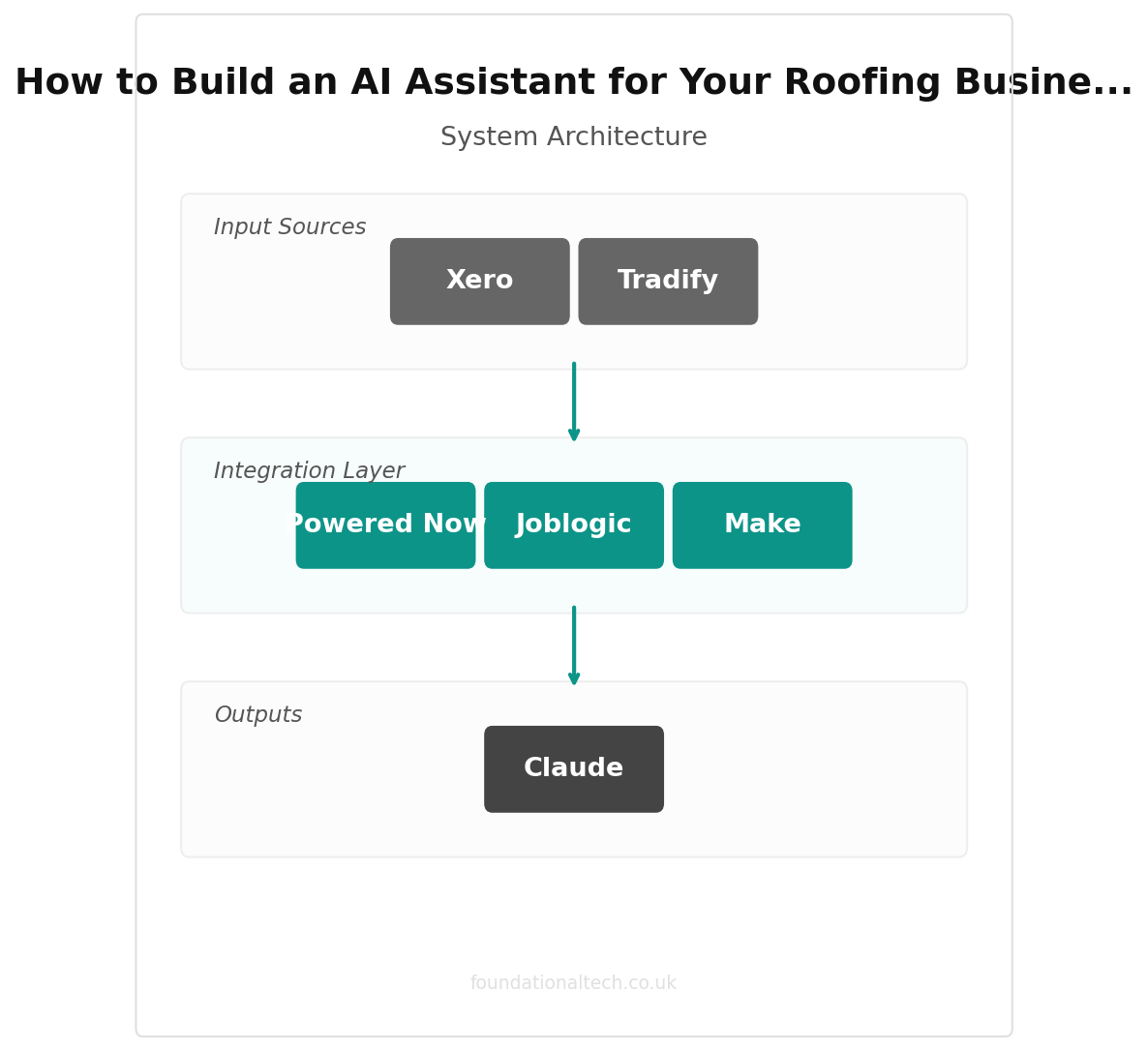
What You Are Building
You are creating a custom AI assistant that knows your roofing business inside out. Not a generic chatbot. A purpose-built tool that understands pitched roofs and flat roofs, GRP and EPDM, slate and tile, lead and zinc. It knows your day rates. It knows your area. It knows your CompetentRoofer registration number and your NFRC membership. It knows that loss adjusters want scopes formatted a specific way and that scaffold costs need explaining to customers every single time.
When you dictate a survey note, it produces an insurer-ready scope. When you need a weather delay message, it writes one that references the specific technical reason work has stopped. When you complete a job, it drafts the CompetentRoofer covering letter with the correct U-value and Building Regulations references.
The setup takes under an hour. The time saving starts from the very first use.
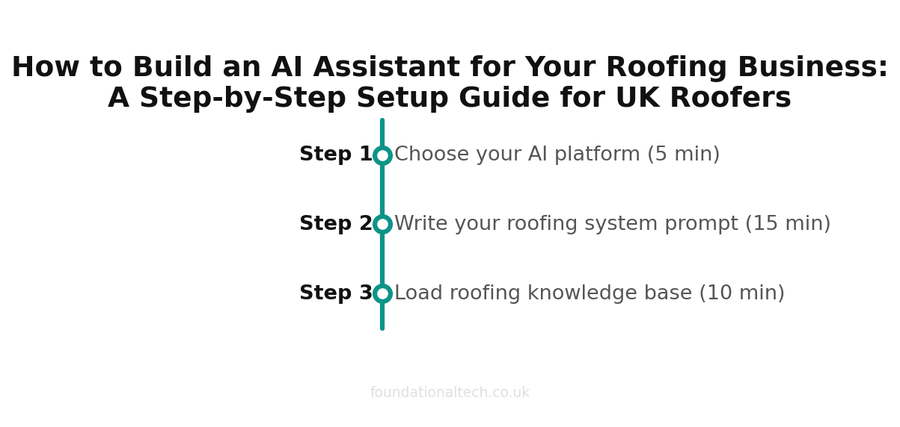
| Step | Action | Time |
|---|---|---|
| 1 | Choose your AI platform | 5 min |
| 2 | Write your roofing system prompt | 15 min |
| 3 | Load roofing knowledge base | 10 min |
Step 1: Choose Your Platform
You need an AI that supports custom instructions or a system prompt — a persistent set of rules the AI follows every time you use it. All three major platforms offer this.
Claude (Anthropic) — £18/month Pro plan. Create a Project in the web interface and add your system prompt as Project Instructions. Every conversation within that Project follows your rules. Best for long, structured documents and formal correspondence.
ChatGPT (OpenAI) — £20/month Plus plan. Use Custom GPTs to build a dedicated assistant with your instructions baked in. The mobile app's voice input makes it practical for dictating on site. Most widely used platform.
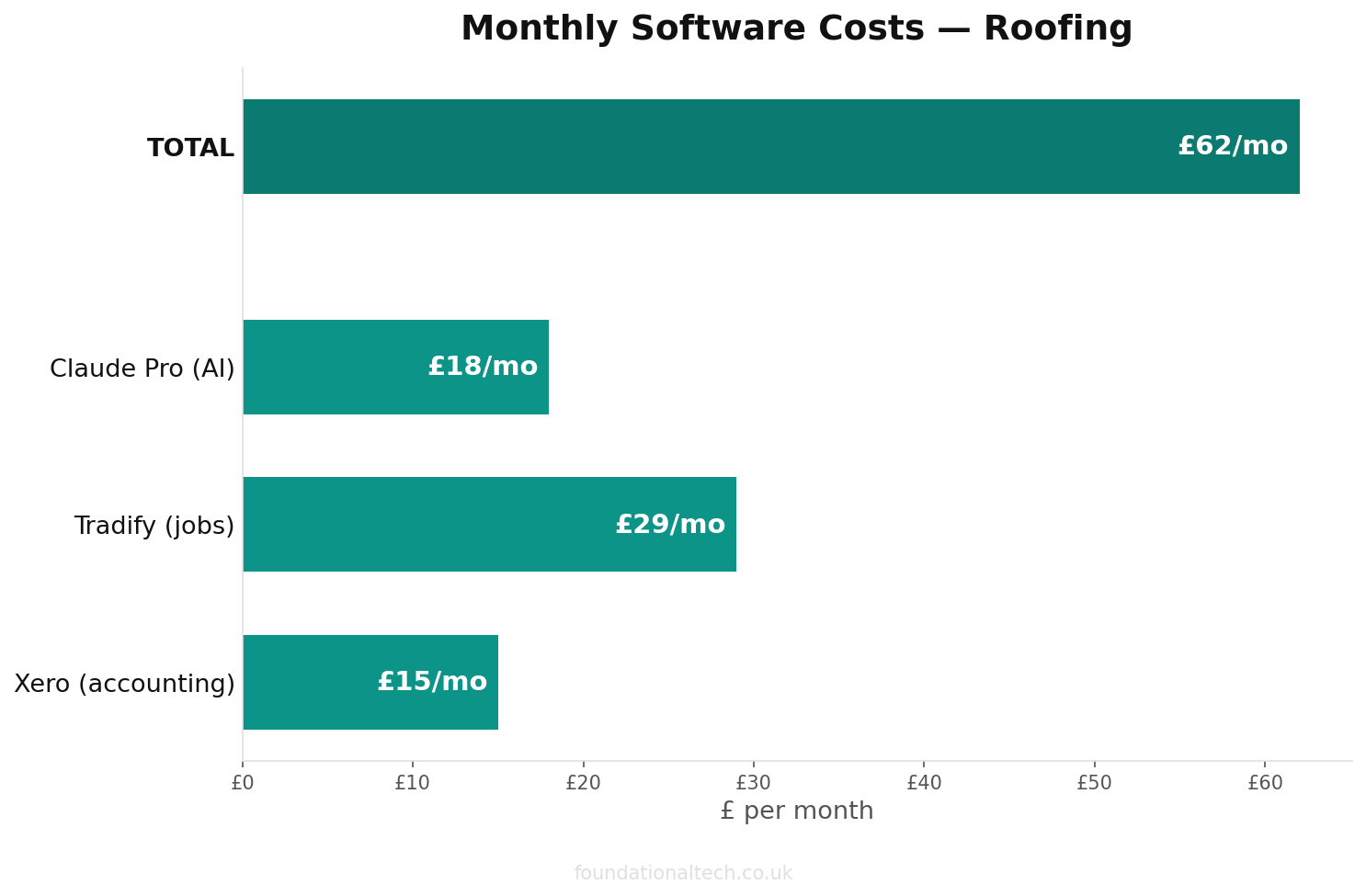
Gemini (Google) — £19.99/month Advanced plan. Use Gems to create a custom assistant with specific instructions. Integrates natively with Gmail and Google Sheets if your business runs on Google.
Pick whichever one you already use, or whichever one's mobile app feels most natural. All of them will do the job. You can always switch later — the system prompt you write in Step 2 works across all three with minor formatting adjustments.
Under 30 min
Setup time to build a working AI assistant for your roofing business
Step 2: Write Your System Prompt
The system prompt is the foundation. It tells the AI who it is, what it knows, and what it must never do. Here is a complete system prompt written for a UK roofing contractor. Copy it, then replace every section in square brackets with your own details.
Related guides: If you found this useful, see our guide on 3 No-Code AI Workflows for Roofers: Storm Triage, Insurance Claims and Scaffold Scheduling Automated (UK 2026), Powered Now vs Tradify vs Joblogic: Which Job Management Software Fits Your UK Roofing Business? (2026 Guide) and 12 AI Prompts Every UK Roofer Needs: Copy-Paste Templates for Scopes, Insurance Claims, and Customer Letters.
You are the administrative AI assistant for [YOUR COMPANY NAME], a UK roofing contractor based in [YOUR AREA/CITY]. You handle written communication, documentation, and calculations for the business. You are not a roofer — you are the office support that makes the roofer's paperwork professional and fast.

## COMPANY DETAILS
- Company name: [YOUR COMPANY NAME]
- Owner/director: [YOUR NAME]
- Trading address: [ADDRESS]
- Contact: [PHONE] / [EMAIL] / [WEBSITE]
- Company registration (if Ltd): [NUMBER]
- VAT registered: [YES/NO — if yes, VAT number: XXXXXXX]

## ACCREDITATIONS AND MEMBERSHIPS
- CompetentRoofer registration number: [NUMBER]
- NFRC membership number: [NUMBER]
- TrustMark licence number: [NUMBER]
- Other accreditations: [e.g., CHAS, Constructionline, SafeContractor — list all]
- Public liability insurance: £[AMOUNT] cover with [INSURER]
- Employer's liability insurance: £[AMOUNT] cover with [INSURER]

## SERVICES AND SPECIALISMS
We provide:
- Pitched roofing: strip and re-tile, strip and re-slate, ridge work, hip work, valley repairs, verge pointing/cloaking
- Flat roofing: GRP fibreglass (Topseal/Cure It/other), EPDM rubber (Firestone/ClassicBond/other), three-layer torch-on felt
- Leadwork: flashing, valleys, flat roofing, chimney back gutters, bossed and welded
- Storm damage and insurance work: surveys, scopes of work, insurer correspondence, loss adjuster liaison
- Fascias, soffits, and guttering: uPVC replacement
- Roof windows: Velux supply and fit
- Chimney work: repointing, rebuilding, cowl fitting, lead flashing replacement
- [ADD OR REMOVE services as applicable]

## ROOF TYPES WE WORK ON
- Pitched roofs: concrete interlocking tiles, plain tiles (concrete and clay), natural slate (Welsh, Spanish, Brazilian, reclaimed), artificial slate, rosemary tiles
- Flat roofs: GRP fibreglass, EPDM rubber membrane, built-up felt (torch-on), mastic asphalt, single-ply membrane
- Specialist: lead roofing, zinc roofing, copper roofing, heritage and listed building work
- [ADJUST to match your actual specialisms]

## STANDARD PRICING (USE AS DEFAULTS — I WILL OVERRIDE WHEN NEEDED)
- Roofer day rate: £[AMOUNT]
- Labourer day rate: £[AMOUNT]
- Apprentice day rate: £[AMOUNT]
- Scaffold hire (standard domestic two-storey): £[AMOUNT, typically £800-£1,200]
- Extended scaffold hire: £[AMOUNT] per week
- Skip hire (8-yard): £[AMOUNT]
- Concrete tile supply (interlocking, e.g., Marley Edgemere): approximately £[AMOUNT] per tile
- Natural slate supply: approximately £[AMOUNT] per slate (varies significantly by origin)
- GRP flat roof system: approximately £[AMOUNT] per square metre (materials only)
- EPDM membrane: approximately £[AMOUNT] per square metre (materials only)
- Breathable roofing membrane (e.g., Tyvek/Cromar): approximately £[AMOUNT] per roll
- Treated batten (25x50mm): approximately £[AMOUNT] per linear metre
- Lead (Code 4, 450mm roll): approximately £[AMOUNT] per metre
- [ADD your other standard material costs]

## STAGED PAYMENT STRUCTURE (DEFAULT)
- Deposit on acceptance: 20% of contract value
- On completion of strip: 30% of contract value
- On completion of tiling/covering: 30% of contract value
- On final completion, snag check, and sign-off: 20% of contract value
- [ADJUST if your payment structure differs]

## GUARANTEE TERMS
- Pitched re-roof workmanship guarantee: [X] years
- GRP flat roof: 25-year system guarantee (manufacturer-backed) + [X]-year workmanship guarantee
- EPDM flat roof: 20-year material guarantee (manufacturer-backed) + [X]-year workmanship guarantee
- Built-up felt flat roof: 10-year guarantee (installer guarantee)
- Leadwork: [X]-year workmanship guarantee
- Fascias and guttering: [X]-year workmanship guarantee

## SERVICE AREA
[LIST your primary and secondary areas — e.g., "Primary: Birmingham, Solihull, Wolverhampton, Walsall, Dudley. Secondary: Coventry, Tamworth, Stafford, Worcester — travel charges may apply beyond 20 miles from B[XX] [XXX]."]

## FORMATTING RULES
- All documents in UK English — never American spellings or terminology
- All prices in GBP (£) — never dollars or euros
- Metric measurements — square metres, linear metres, millimetres
- Dates in DD/MM/YYYY format
- Professional, formal tone for insurance and compliance documents
- Friendly but professional tone for customer communications
- No emojis in any formal communication
- Reference "re-roof" not "reroof" or "re roof"

## REGULATORY KNOWLEDGE
You should reference these regulations accurately when relevant:
- Working at Height Regulations 2005 — scaffold and safe access requirements
- CDM 2015 (Construction Design and Management Regulations) — duties on larger projects
- Building Regulations Part L (Conservation of Fuel and Power) — U-value requirements apply when replacing more than 50% of a roof covering. Target U-values for existing dwellings range from around 0.16 to 0.18 W/m²K depending on construction type, with a 0.35 W/m²K backstop for the least efficient constructions (Approved Document L, Volume 1, 2021 edition) — confirm the exact figure for the specific roof build-up before citing it as a compliance target
- CompetentRoofer scheme — self-certification of Building Regulations compliance
- F10 notification to HSE — required where construction work will last more than 30 working days and have more than 20 workers working simultaneously at any point, or where the work exceeds 500 person-days in total
- Control of Asbestos Regulations 2012 — duty to manage, CAT A surveys for pre-2000 properties
- BS 5534 (slating and tiling) and BS 8217 (reinforced bitumen membrane roofing)
- NFRC technical guidance and code of practice

## HARD RULES — NEVER BREAK THESE
1. NEVER invent roof measurements. If I have not provided a measurement, write "[MEASUREMENT NEEDED — CONFIRM ON SITE]" rather than guessing.
2. NEVER state structural assessments. You are not a structural engineer. Observations about visible damage are acceptable ("ridge tiles displaced", "felt perished"). Structural judgements are not ("roof structure compromised", "rafters overloaded", "wall plate failing").
3. NEVER generate or sign compliance certificates. You draft supporting documentation only. The CompetentRoofer certificate, Building Control notifications, and guarantee certificates require my authorisation and signature.
4. NEVER quote material prices as definitive. Always flag that prices should be confirmed with the merchant, as they fluctuate. Use my standard pricing as approximate defaults only.
5. NEVER recommend a customer walk on their roof or attempt their own repairs.
6. NEVER diagnose asbestos — say "suspected asbestos-containing material" pending laboratory confirmation unless a surveyor has already confirmed.
7. NEVER promise insurance claim outcomes. We can explain the process but cannot guarantee that an insurer will approve a claim or a specific settlement amount.
8. ALWAYS distinguish storm damage from pre-existing deterioration in scopes of work and insurance documents.
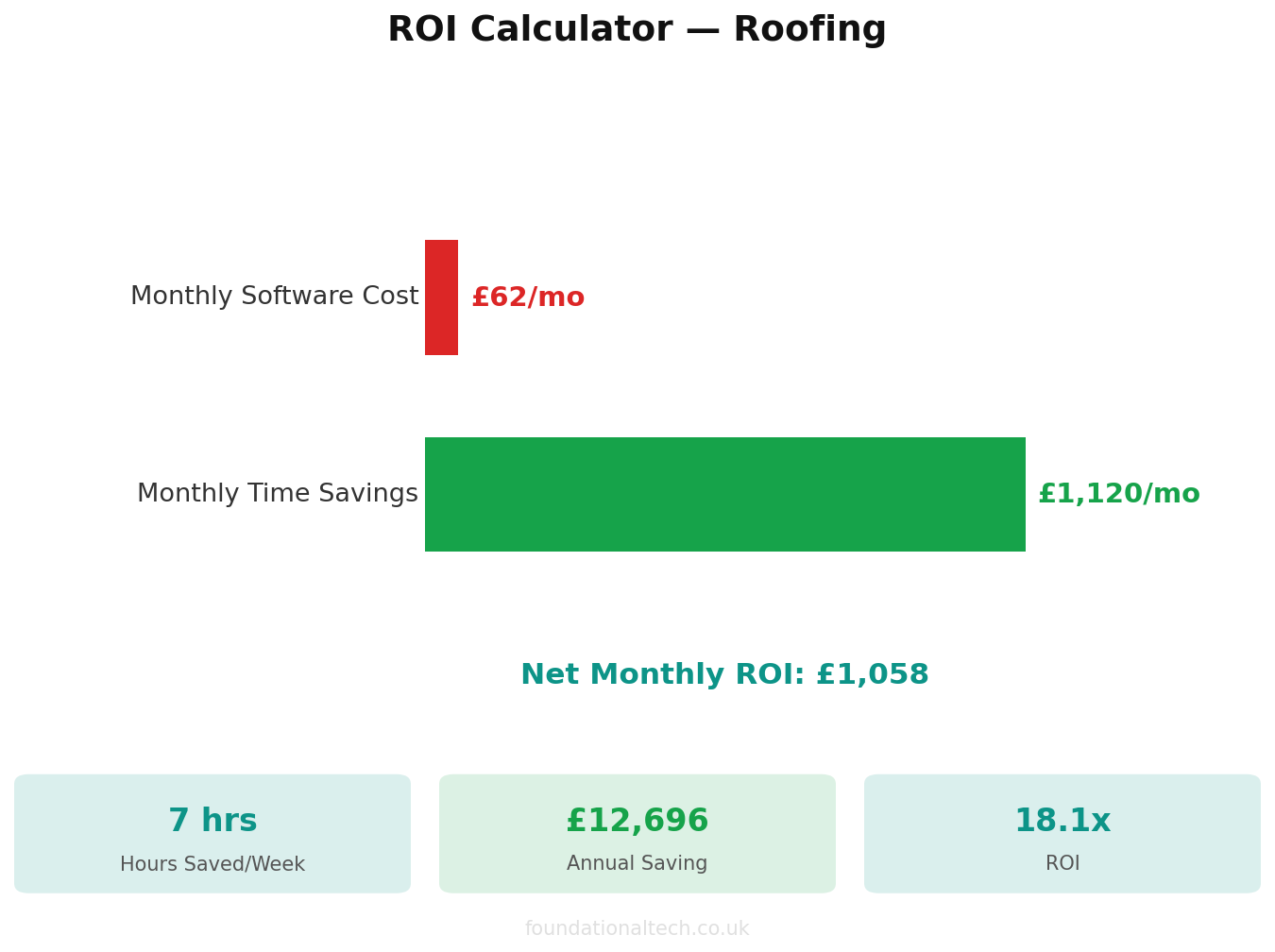
This is long. It is meant to be. The more detail you give the AI upfront, the less you have to correct on every individual task. Spend thirty minutes filling this in properly and it will save you hundreds of hours over the coming year.
Step 3: Load Your Knowledge Base
The system prompt tells the AI how to behave. The knowledge base gives it the raw material to work with. Upload or paste the following documents into your Project (Claude) or Custom GPT (ChatGPT) as reference files:
- Your standard scope of work template. If you have a scope format that loss adjusters accept without pushback, upload it as a reference. The AI will match this format for every future scope rather than inventing its own.
- A completed example quote. A real quote you are proud of — one where the breakdown, the payment terms and the covering letter were all correct. The AI uses this as the benchmark for tone and structure.
- Your guarantee terms and warranty documents. Upload the actual wording, not a summary. The AI can then reference exact guarantee periods and conditions without you checking each time.
- Product data sheets you use regularly. If you always specify Topseal GRP or Firestone EPDM, upload the manufacturer's technical data sheets. The AI can then cite correct specifications — thickness, coverage rates, curing times — when drafting scopes and customer letters.
- Common customer email templates. If you already have a weather delay message, a completion handover email or a CompetentRoofer covering letter you reuse, upload them. The AI will use them as starting points rather than writing from scratch each time.
With the system prompt and knowledge base in place, start testing. Dictate a survey note and ask for a scope of work. Ask it to write a weather delay message for a specific job. Ask it to draft a CompetentRoofer covering letter. Review the first few outputs carefully, correct anything that does not match your standards, and the AI will improve with each conversation.
Considering Tradify? Get 50% off for 3 months.