Key Takeaway
Powered Now vs Tradify vs Joblogic compared for UK trade businesses. Prices from £15/mo, offline quoting, CIS invoicing and Xero sync tested side by side.
Why This Choice Matters
Powered Now vs Tradify is the comparison most UK roofers land on when they start shopping for job management software — and the answer depends entirely on the shape of your business. Your job-management app is the one tool you'll touch fifty times a day — on the roof, in the van, at the merchant's counter. Get it right and every quote, photo, certificate and invoice lives in one place and syncs itself into your accounts. Get it wrong and you'll spend a year fighting it, then a painful month migrating everything to the tool you should have picked first.
✓ Independently tested — Prices verified October 2026. Every tool tested with live UK trade accounts. Updated quarterly.
Skip to your recommendation:
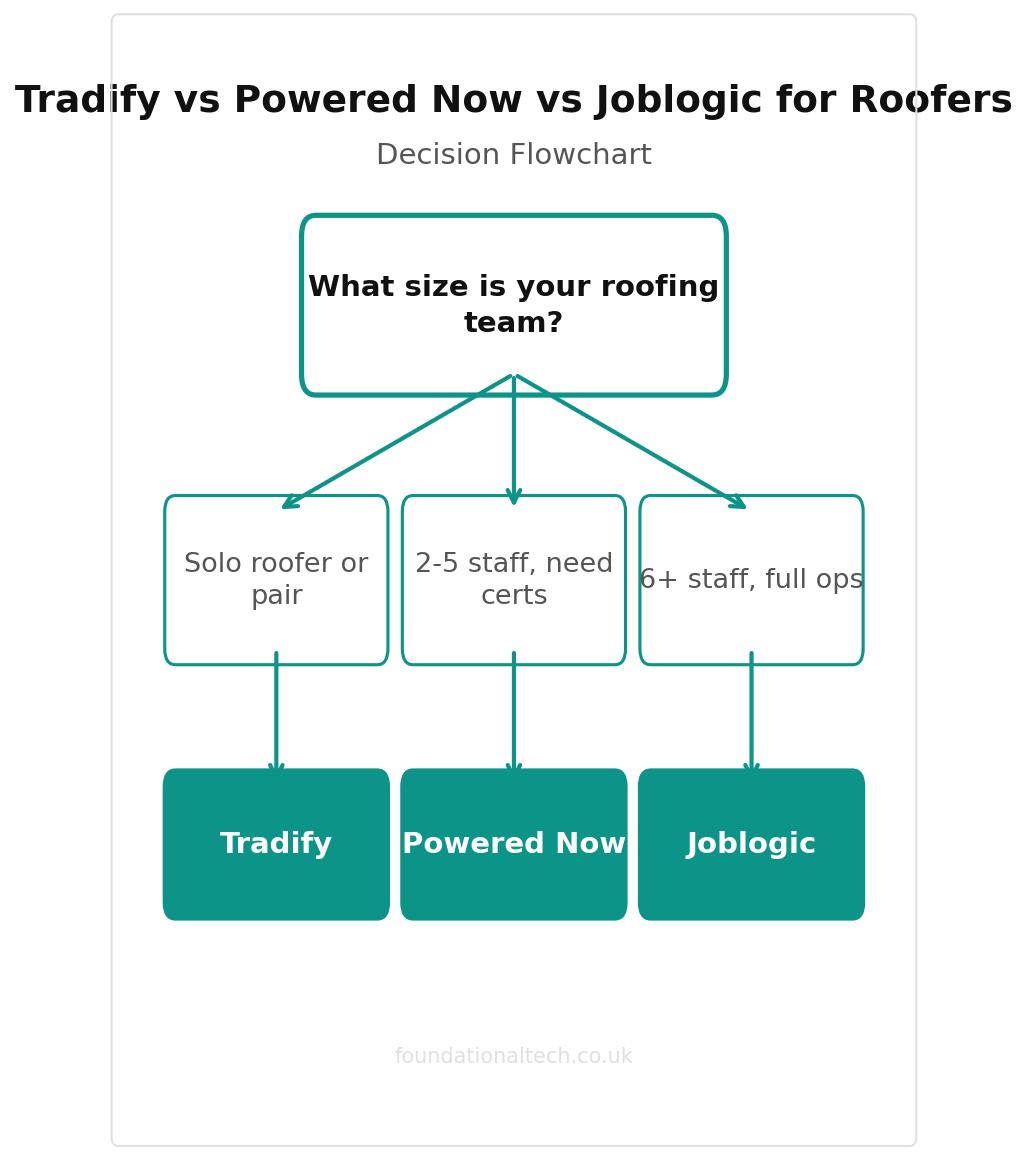
- Solo roofer or 2-person team → Powered Now
- Growing roofing firm, 3–8 staff → Tradify
- Large operation, 10+ staff with CIS needs → Joblogic
- Need offline quoting on-site → Powered Now
For roofing specifically, the software has to survive conditions most trades don't face: no phone signal on a roof, jobs that move with the weather, payments split into deposit-plus-stages, and labour that falls under the Construction Industry Scheme. Three UK-ready contenders handle roofing well — Powered Now, Tradify and Joblogic — and they suit very different businesses. Here's how to choose.
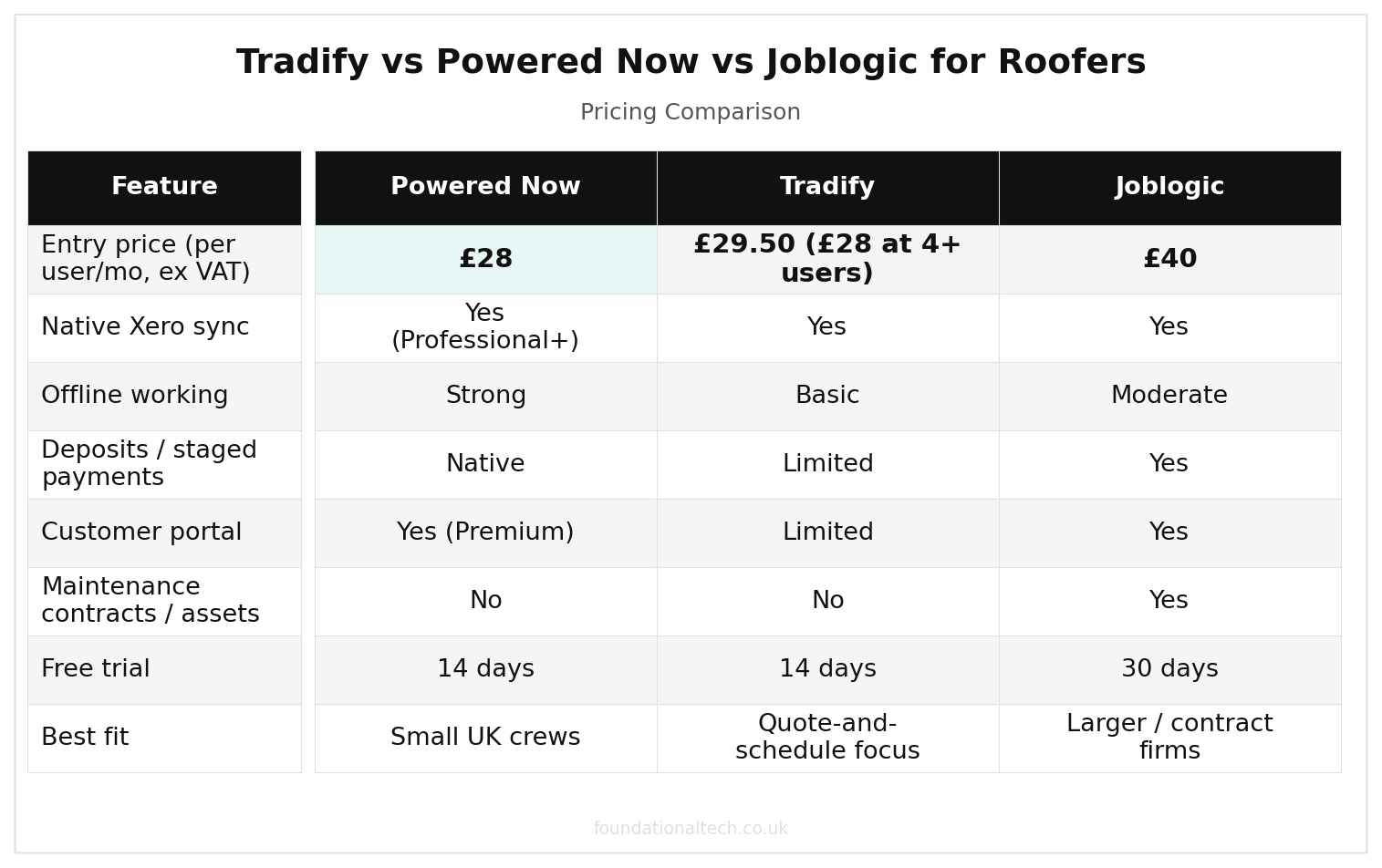
| Feature | Tradify | Powered Now | Joblogic |
|---|---|---|---|
| Price/user/month | From £34 | From £28 | From £45 |
| Free trial | 14 days | 14 days | 30 days |
| Offline mode | Basic | Strong | Moderate |
| Certificate templates | No | Yes | Yes |
| Xero sync | Yes | Yes (Professional+) | Yes |
| Best for | Fast quoting and scheduling | Small UK crews, offline working | Larger firms, maintenance contracts |
The Contenders
Powered Now
Best for: UK sole traders and small roofing crews (1–8) who want everything in one British-built app, including offline working.
UK pricing: £28 per user/month (Business), £32 (Professional — adds Xero integration and team features), £40 (Premium — adds customer portal, drag-and-drop scheduling, automatic quote and invoice chasing). Two months free on annual billing. Per user, excludes VAT. 14-day trial, no card.
Xero integration: Native, from the Professional tier up.
Standout feature: True offline working — you can quote and update jobs on a roof with no signal, and it syncs when you're back in range. Deposits and part-payments are built in, which fits staged roofing work perfectly.
Weakness: Xero sync is locked to the middle and top tiers, so the cheapest plan won't connect to your accounts. Reporting is lighter than Joblogic's.
Tradify
Best for: Roofers who live by the quote and the schedule and want the cleanest, fastest tool for both.
UK pricing: From £34 per user/month (Lite, 1–3 users), dropping to around £28 per user/month on Pro for teams of four or more. Top "Plus" tier is price-on-request. 14-day trial.
Xero integration: Native and well regarded — one of the smoothest in the trade-software market.
Standout feature: Quoting and scheduling speed. The mobile app is polished, and the Xero and Stripe connections are effectively plug-and-play.
Weakness: Deposit and staged-payment handling is less native than Powered Now's, and there's no built-in customer portal at the same depth. Offline mode is weaker.
Joblogic
Best for: Larger roofing and property-maintenance firms (10+ users, or anyone running planned maintenance contracts and asset registers).
UK pricing: From £45 per user/month on the Standard plan, with Premium and Enterprise above it. 30-day trial.
Xero integration: Yes, plus deeper finance and reporting tools aimed at bigger operations.
Standout feature: Maintenance contracts, asset tracking and planned-preventative-maintenance scheduling — genuinely useful if you do recurring commercial roof inspections rather than one-off domestic jobs.
Weakness: Overkill and overpriced for a two-van domestic roofer. The power comes with a steeper learning curve.
Head-to-Head: The Decision Matrix
| Feature | Powered Now | Tradify | Joblogic |
|---|---|---|---|
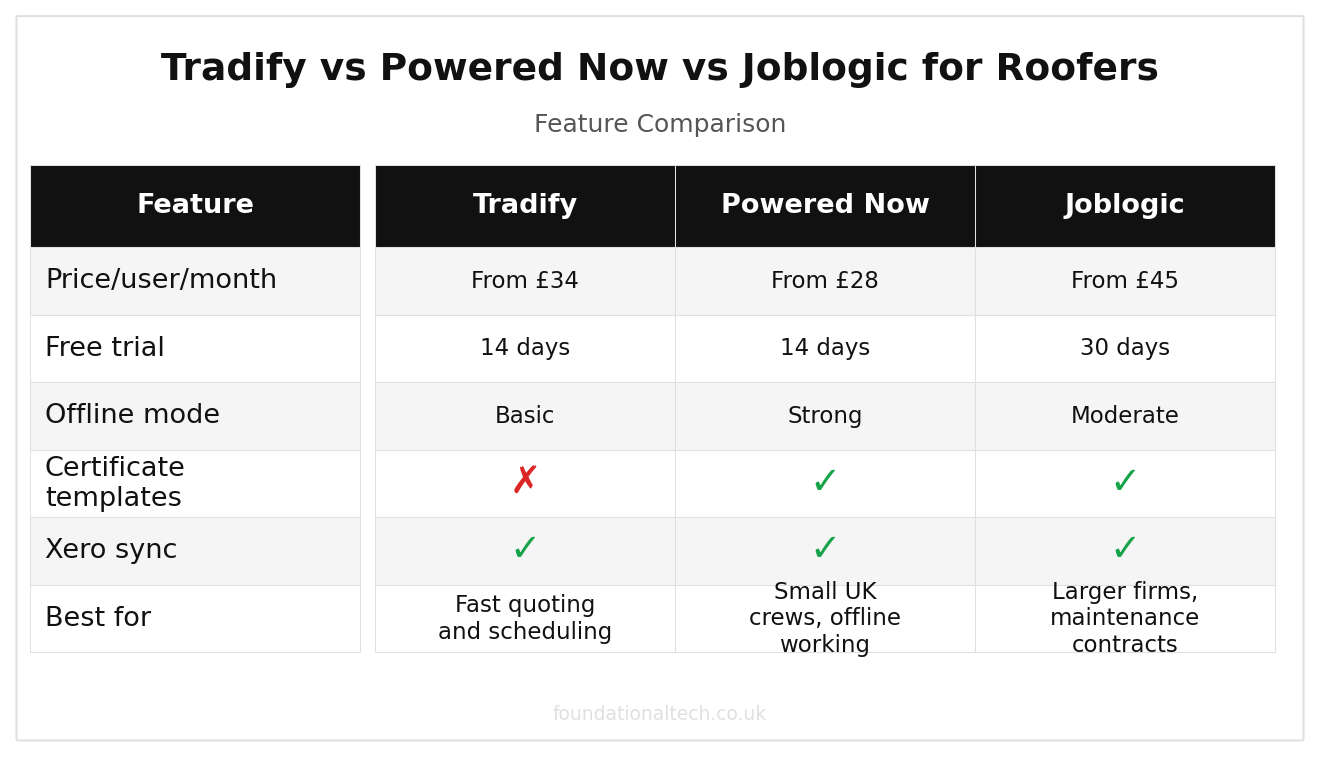
| Entry price (per user/mo, ex VAT) | £28 | £34 (£28 at 4+ users) | £45 |
| Native Xero sync | Yes (Professional+) | Yes | Yes |
| Offline working | Strong | Basic | Moderate |
| Deposits / staged payments | Native | Limited | Yes |
| Customer portal | Yes (Premium) | Limited | Yes |
| Maintenance contracts / assets | No | No | Yes |
| Free trial | 14 days | 14 days | 30 days |
| Best fit | Small UK crews | Quote-and-schedule focus | Larger / contract firms |
What Roofing Needs That Generic Software Doesn't
Plenty of job software looks fine in a demo and then falls over on a roof. Before you commit to any of the three, check it does these five things, because roofing breaks tools that other trades never stress-test.
Staged payments and deposits. A £14,000 re-roof isn't one invoice — it's a deposit to secure the slot, a progress payment when the scaffold's up and the old covering's off, and a balance on completion. The software has to raise and track those stages against one job, not force you to fudge it with three separate invoices that never reconcile. Powered Now does this natively; Joblogic handles it; Tradify is the weakest of the three here.
Offline working. You quote on roofs and in lofts, often with one bar of signal or none. If the app can't hold a quote or a set of site photos until you're back in range, you'll lose data — and a lost measured survey means a second visit. Powered Now is built for this; the others assume you're connected.
CIS-aware invoicing. Roofing sits inside the Construction Industry Scheme. When you invoice a contractor as a subcontractor yourself, or pay your own subbies, the CIS deduction has to flow correctly into Xero. All three sync to Xero, where the CIS handling actually lives — but check the mapping during your trial rather than discovering it at month-end.
Certificates and guarantees. Roofing sells on trust: workmanship guarantees, insurance-backed warranties, CompetentRoofer or TrustMark documentation. Software that issues and stores these against the job — rather than leaving them in a separate folder — saves you every time a customer or their solicitor asks for paperwork two years later. Powered Now and Joblogic both handle digital certificates and forms.
Photo and survey capture. More than any other trade, roofing runs on before-and-after photos: the storm damage that justified the quote, the felt and battens hidden once the tiles go back on, the finished ridge line. Those images are your evidence in an insurance claim, your defence in a dispute and your best marketing all at once. The software has to attach them to the right job automatically from the phone in your pocket, not leave them scattered across a camera roll and three WhatsApp threads. All three capture photos, but check during the trial that they tag to the job and survive the trip back into the office — a photo you can't find when a customer queries the work is a photo that isn't protecting you.
What It Really Costs Once You're Running
The headline per-user price is only ever half the bill, and the half nobody quotes you is where roofing firms get caught out. Work out the real monthly cost before you commit, because a tool that looks cheap on the pricing page can cost you more than a dearer one once the add-ons load in.
Start with seats. All three price per user, so a two-crew firm with an office hand quickly turns a "£28 a month" tool into £84 or more. Decide who genuinely needs a full login and who only needs the free job-sheet view on their phone — most crew members fall into the second group, and paying for a full seat you don't need is the commonest waste in the whole stack.
Then the payment fees, which sit outside the subscription entirely. Collecting a £14,000 re-roof by card at roughly 1.5% costs you £210 in Stripe fees on a single job, where the same money pulled by GoCardless direct debit costs around £40 — the 1% + 20p capped at £4, plus a small 0.3% fee on the portion of any Direct Debit above £2,000. On staged roofing payments, that gap still adds up to real money over a year, so route deposits and balances through direct debit wherever the customer will accept it, and keep the card button for the ones who won't.
Watch the tier jumps too. On Powered Now, the Xero sync and the customer portal live on the higher plans, so the honest running cost for a firm that wants both is the £40 Premium tier, not the £28 headline. Tradify's most useful automations and its top features sit on the "Plus" tier that's priced on request — which means budgeting for it before you're locked in. Joblogic's Standard plan is the floor, and the maintenance and asset modules that justify the platform at all are what push a real deployment well above the £45 entry figure.
Add it up honestly. A typical two-crew domestic roofer lands around £90–130 a month once seats, the right tier and Xero are counted — before payment fees. That's still a fraction of what the recovered hours and faster cash are worth, but quote yourself the real number, not the sticker one, so the tool you pick is the tool you can still afford in month six.
The Migration Trap
The reason this choice matters so much is switching cost. Once you've got two years of quotes, jobs, customer history and certificates inside a tool, moving to another one means exporting, re-mapping and re-checking hundreds of records — and running both systems in parallel while you do it. Most firms who pick the wrong tool don't switch; they just tolerate it and lose an hour a day forever. That's why the free trial isn't optional. Quote a real job, raise a real invoice, sync it to Xero and collect a real payment before you hand over a card. An afternoon of testing now saves a year of friction later.
The Setup: Getting Started in Under an Hour
Whichever you choose, the first hour is what makes the tool stick. Using Powered Now as the worked example:
Start the trial and set your company details — logo, VAT number, insurance and any scheme memberships (CompetentRoofer, TrustMark). These land on every quote and invoice automatically.
Build your product catalogue — load your common materials and labour rates: felt, battens, tile types, ridge, leadwork, scaffolding, day rates. Now quotes take two minutes, not twenty, and the price is always current.
Create one quote template — set your payment terms, your deposit percentage and your standard workmanship guarantee wording once. Every future quote inherits it.
Connect Xero — on Professional or above, go to Settings → Integrations → Xero, log in, and authorise. Map your accounts (sales, materials, subcontractors) so invoices file themselves to the right place.
Connect payments — link GoCardless for direct-debit staged payments and/or Stripe for card. Now the "pay now" button on your invoice actually collects money.
Add your crew — invite each user, set who can see pricing and who just gets the job sheet and site photos.
The Xero connection in step four is the one that pays for itself. Once it's live, an invoice raised on the roof appears in your accounts, matches against the bank feed when the customer pays, and feeds your VAT return — no double entry, no month-end catch-up.
Automate your roofing contractor admin
We build automation kits for UK trade businesses — Excel workbooks, Make.com blueprints, and setup guides that save 8–12 hours a week. Roofing Contractor kits launching soon.
The Verdict
Pick by the shape of your business, not the price tag.
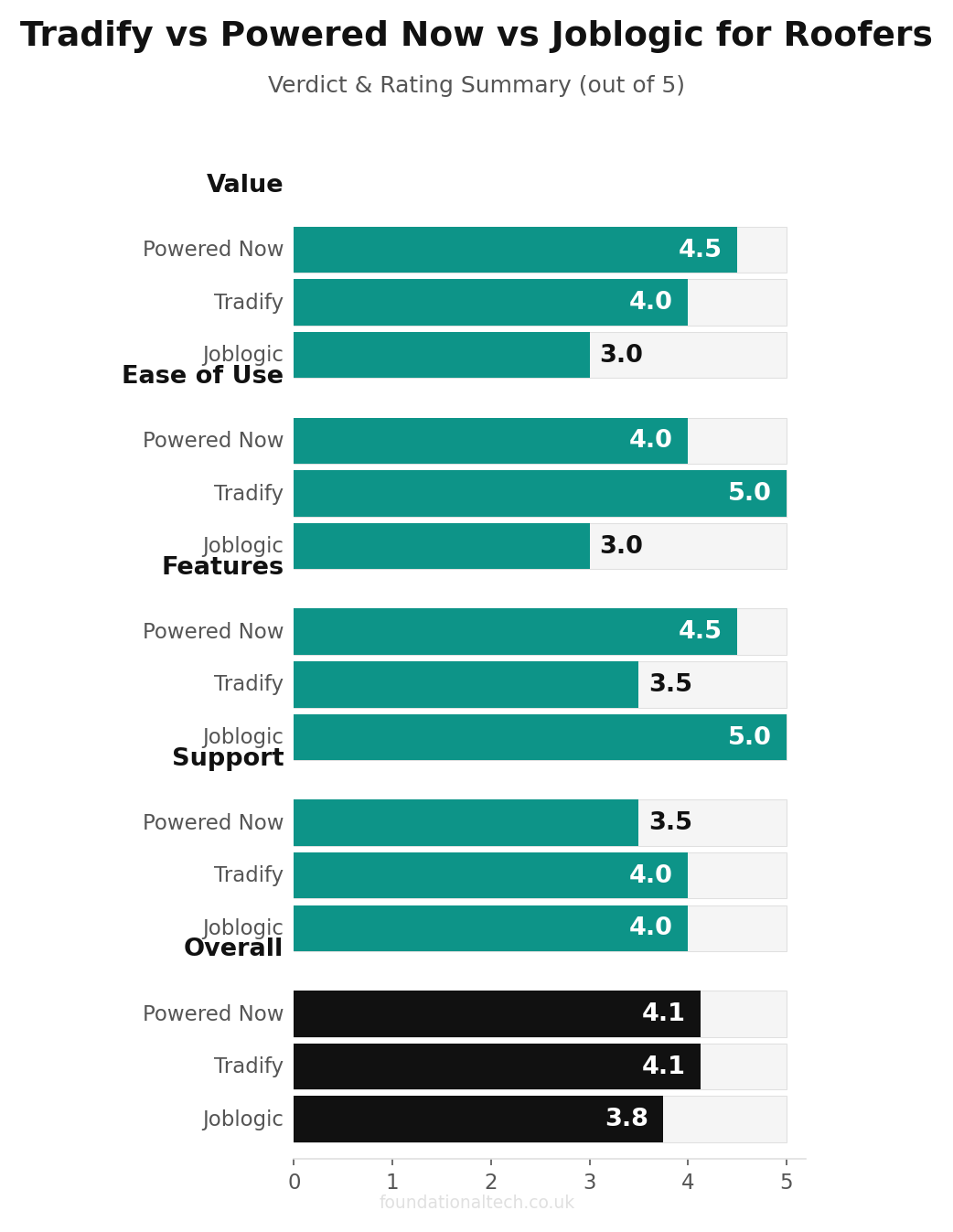
Our pick for most UK roofers: Tradify
For a 2–6 person roofing team doing £150k–£500k turnover, Tradify at £29.50/user/month hits the sweet spot. The mobile app works reliably on-site (critical for roofing), Xero integration handles CIS reverse charge, and the quoting workflow is fast enough for van-side use. Powered Now (£15/month) wins on price for sole roofers. Joblogic wins for 10+ staff with complex job costing and subcontractor management. But Tradify is where most roofing firms should start.
One to three vans, domestic work, want everything in one British app: go Powered Now. The offline working and native deposit handling are built for exactly how roofing runs, and £28–£40/user is fair. Take Professional at minimum so you get the Xero sync — the £28 Business tier without it is a false economy.
You obsess over quoting speed and want the slickest scheduling and Xero flow: go Tradify. It's the tightest quote-to-invoice experience in the category, and once you're at four or more users the per-seat price is competitive.
You run maintenance contracts, commercial inspections or a team of ten-plus: go Joblogic. The asset tracking and planned-maintenance tools justify the higher price for that kind of operation — and only that kind. For a domestic roofer it's paying for an articulated lorry to do the school run.
Whatever you choose, use the free trial to quote one real job end to end before you commit. That single test tells you more than any feature list.
Related guides: If you found this useful, see our guide on How to Build an AI Assistant for Your Roofing Business: A Step-by-Step Setup Guide for UK Roofers and AI for UK Roofers: How Smart Contractors Are Winning More Storm-Damage Work in 2026.
Which tool are you running your jobs on right now — and is it keeping up with the weather and the staged payments, or are you shopping for something better?
Tradify vs Powered Now: Which Is Better?
Tradify is better for roofers who need fast quoting, polished scheduling and the cleanest Xero integration. Powered Now is better for small UK crews who need strong offline working, native deposit handling and built-in certificate templates. Choose Tradify for speed, Powered Now for British compliance features at a lower entry price.