Key Takeaway
UK painter automated his business over one winter. Full case study with YourTradebase, Xero, Dext, GoCardless — real costs, time savings, and setup steps.
Liam Boyce lost a £3,400 job to a quote he never sent.
Last October, a letting agent he'd worked with twice offered him a three-flat void package in Stockport — walls, ceilings, woodwork, the lot, tenants out, keys available Monday. He viewed the flats on the Thursday, priced them in his head on the drive home, and meant to write it up that night. A domestic job overran on Friday. Saturday was his daughter's swimming gala. By the time the quote went out on Tuesday morning, the agent had already given the package to a firm that had replied on Friday afternoon. The winning price, Liam later learned, was £200 higher than his.
That's the detail that stung. He didn't lose on price. He didn't lose on quality — the agent had used him twice precisely because his finish was better. He lost on the four days between pricing a job in his head and getting it onto paper.
Liam is a composite of decorating businesses we've worked with, but every number that follows is real. Real 2026 tool pricing, real payment-cycle benchmarks, and the before/after maths this series established in Articles 2 to 4.
The Business, Before
One man, one van, seventeen years on the brushes. Around £52,000 turnover, roughly 15 jobs a month — two-thirds domestic repaints, a steady drip of void work from two letting agents, and the odd fortnight subcontracting on a site, paid under CIS.
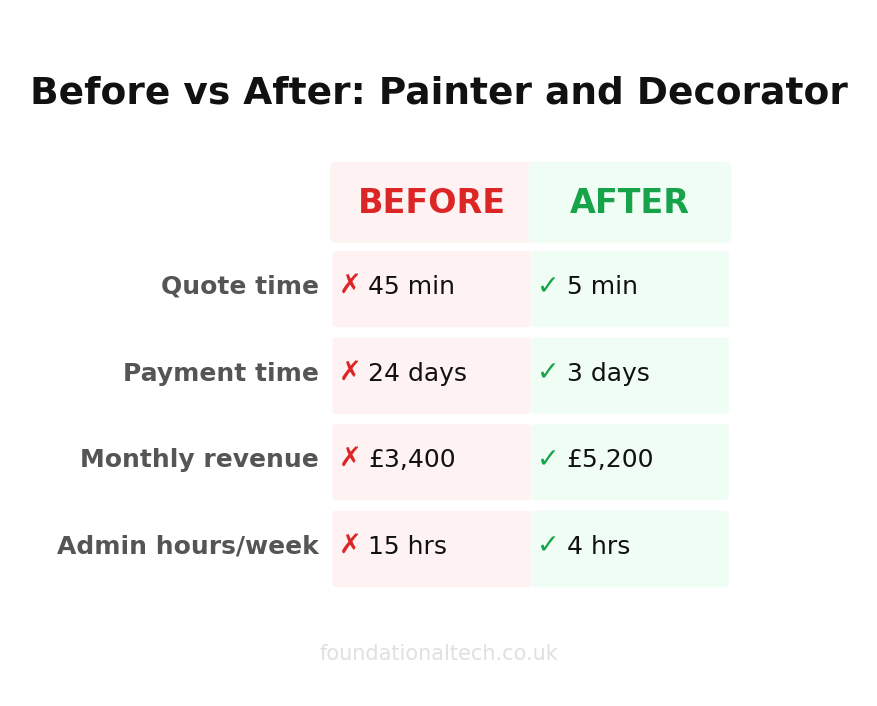
His admin system: quotes typed up at the kitchen table from photos and a phone note, usually two to four days after the site visit. No deposits — "never felt right asking." Invoices sent when he remembered, which meant Sunday evenings. Domestic customers paid in 24 days on average; the letting agents paid in 35, whenever the monthly run happened to fall. At any given moment £2,500 to £3,500 of finished work sat unpaid. Materials went on the Dulux trade account, which billed on its own 30-day clock regardless of any of that. Twice a year the statement landed before the money did, and Liam quietly funded both ends of his own jobs from the family account.
Sunday admin: about five hours. Every week. For seventeen years, minus holidays. Call it 4,000 hours of his life spent retyping things he already knew.
What pushed him wasn't the Sunday hours, though. It was doing the maths on the lost void package: at ten quotes a week going out days late, how many other jobs had died of silence that he'd never even heard about?
November: The Spine
Decorating's calendar hands its owner an odd gift: exterior work dies in November, interior repaints only half-fill the gap, and the diary breathes out until February. Most decorators treat the quiet months as a problem. Liam treated them as capacity — he rebuilt his admin in the exact weeks his competitors were worrying about filling the diary.

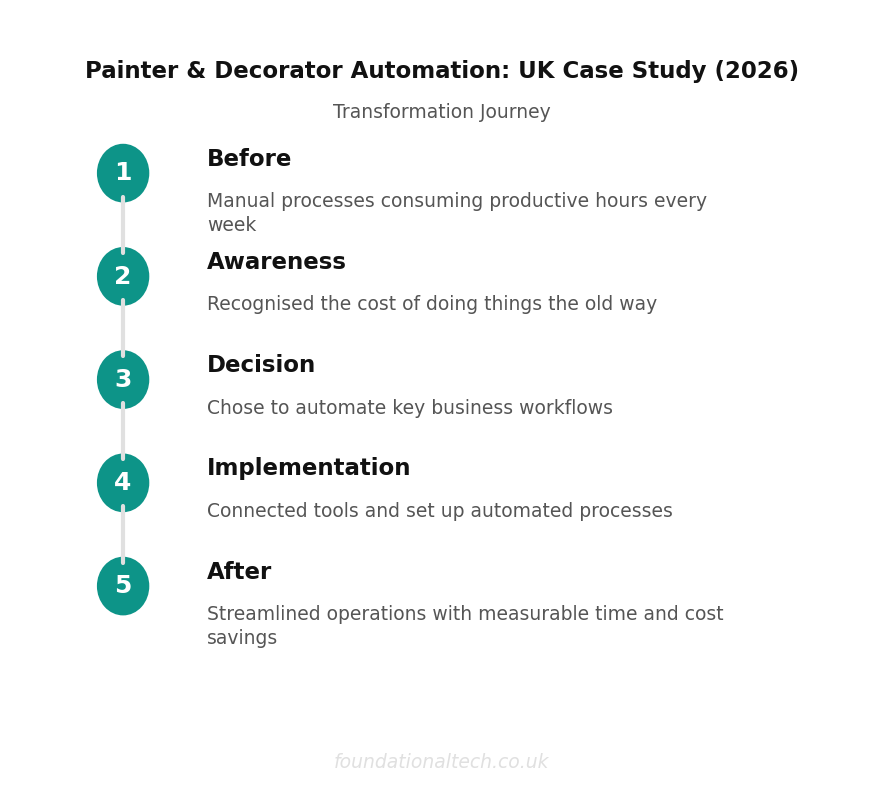
Month one was the unglamorous plumbing from Articles 2 and 3:
YourTradebase (£15/month) for quoting and job tracking. He spent one full evening loading his price book — his real rates, prep categories, and the new-plaster and pre-1960 surcharges he'd previously carried in his head. Quotes now went out from the van, the same evening as the site visit, on his phone.
Xero Ignite (£15/month), connected natively to YourTradebase, so an accepted quote became a job and a completed job became an invoice without retyping.
Deposits, finally. A third at acceptance, framed exactly as Article 3 suggests: "the deposit covers your materials order, so we're ready to start on day one." In four months, not one customer has pushed back. Seventeen years of not asking, and the objection he feared turned out not to exist.
GoCardless mandates for both letting agents. Void work is the steadiest money in his book and the slowest to arrive, so it went onto Direct Debit first. The fee maths suits decorating volumes: on a typical £680 void repaint the charge caps out at £4, however large the invoice runs. Both agents signed the same week — from their side, one mandate replaced a monthly pile of paper invoices to process, and the void turnaround money stopped depending on when their payment run happened to fall.
December to January: The Money Plumbing
Month two attacked the two-ledger problem from Article 4. Domestic work paid gross; site work paid net of CIS at 20%. Liam had been untangling that at year-end, badly, in a single painful weekend with his accountant charging by the hour.
Dext (~£24/month) went on his phone with one non-negotiable habit: photograph the receipt at the trade counter, tag it to the job, before the van door shuts. Small receipts are the decorator's disease — his December statement had 41 separate trade-counter purchases on it. By mid-January the habit was automatic.
The CIS flag moved to the front of the process — set when the job is created, not discovered at year-end, exactly as Article 5's third workflow maps it. Site income now lands in Xero pre-labelled, deduction statements filed against it.
Mileage stopped leaking. A tracking app (about £5/month) now logs every postcode-to-postcode hop at HMRC's 45p a mile. His first full month captured £118 of mileage he'd previously never claimed — short Toolstation runs, mostly, the trips that vanish from memory by Sunday.
January's trade statement was the first in years he read without a small knot in his stomach. Every line already sat in Xero, tagged to a job, reconciled against a deposit that had cleared weeks earlier.
February: The AI Goes On Last
With the data spine in place, month three added the pieces from Articles 6 to 9 — and this is where the order matters. Liam is adamant, looking back, that if he'd started here, the whole thing would have collapsed. AI writing quotes from a price book that only existed in his head would have produced confident nonsense. By February, the price book was real, loaded, and battle-tested. The AI had something true to read.
A Claude Pro Project (Claude Pro, ~£18/month) built to Article 8's recipe: rate card, prep categories, finishes one-pager, letting-agent menu, CIS one-pager. The system prompt carried his tone — plain, northern, no exclamation marks.
The enquiry job-card workflow from Article 9, running on Make's free tier: enquiries arrive as structured job cards with the pre-1960 lead-paint flag applied automatically, plus the list of what to ask at the viewing.
The quote follow-up nudge, also from Article 9. Any quote silent after three days gets a drafted nudge — brisk for the agents, warm for homeowners — waiting in his drafts folder each morning. Twenty seconds to read, one tap to send.
He kept one rule absolute: nothing AI-drafted reaches a customer unread. The drafts are good — most days they go unedited — but they go seen.
What Easter Looked Like
By the spring exterior season — the busiest quoting weeks of a decorator's year — the pieces were compounding. One job, end to end: a masonry-and-woodwork exterior in Heaton Moor, enquiry Tuesday 7pm. Job card waiting when he finished tea. Viewing Thursday, quote sent from the van at 6:40pm, deposit paid Friday morning, paint ordered Friday afternoon on the trade account with the receipt in Dext before he left the counter. Walkthrough three weeks later, balance invoice fired from the doorstep, paid in four days. Total admin: minutes, spread thin, none of them on a Sunday.
The Numbers, Four Months In
Against his old baseline:
Quote turnaround: 2–4 days → same evening as the site visit
Quote win rate: roughly 1 in 4 → better than 1 in 3 — nine extra jobs won in the first quarter, worth about £8,100
Days to payment, domestic: 24 → 6
Days to payment, letting agents: 35 → 16, riding the mandate instead of the monthly run
Unpaid work outstanding: £2,500–£3,500 → consistently under £1,000
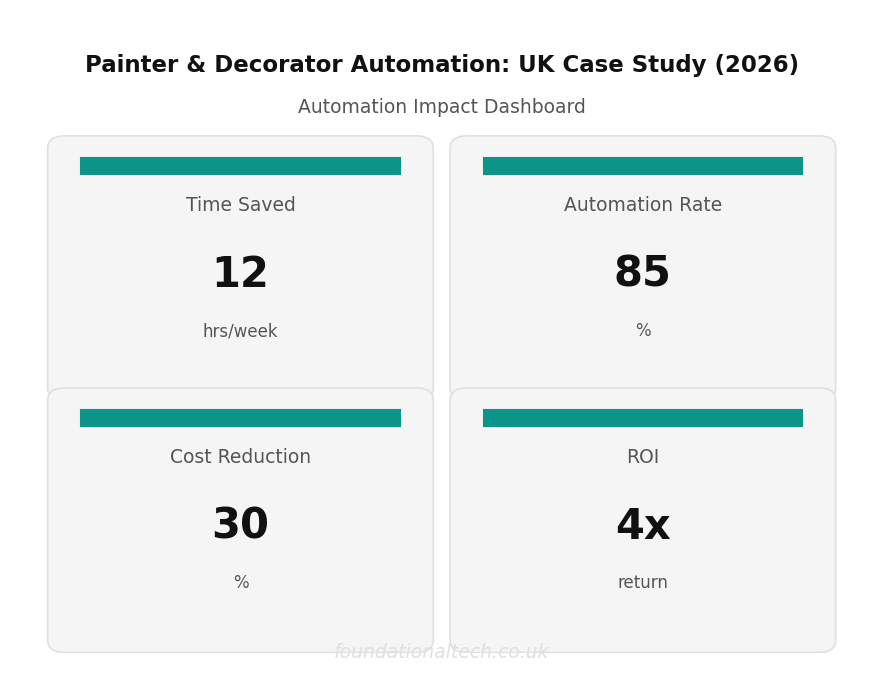
Sunday admin: ~5 hours → ~45 minutes, and no longer on Sundays
Previously unclaimed mileage: ~£100+/month now captured
Turnover: £52,000 → tracking £64,000, same van, same one pair of hands. The ceiling is now his own diary, not demand — which is why the win-rate jump shows up as booking further ahead rather than pure extra revenue
The Stack, Line by Line
Call it £91 a month plus transaction fees — around £1,100 a year, against £8,100 of extra won work in a single quarter and four recovered hours a week.
£2,500/month extra revenue
by automating quoting, invoicing and client follow-ups
What Liam Would Tell You to Do First
Take deposits before you buy any software. It's free, it fixes cash flow faster than any tool, and the pushback you're braced for isn't coming. He'd wasted seventeen years on an objection that existed only in his head.
The boring workflow won the most work. Not the AI quote-writer — the three-day nudge. Decorating jobs are lost to silence far more often than to price, and the nudge is the cheapest fix in the whole stack.
Write the price book down before you show it to a machine. The February AI layer worked because the November spine existed. An assistant that knows your real rates is an asset; one guessing at them is a liability with good grammar.
Use the winter. The seasonal dip every decorator complains about is the best implementation window any trade gets. Rebuild in November and the spring surge lands on rails.
If you rebuilt your admin over one winter like Liam did, which leak would you fix first? The quotes going out days late, the deposits you've never asked for, or the agency invoices that pay whenever the monthly run decides? Reply with yours; the answers will tell me which part of this series to go deeper on.
A & Y Financial Services builds these exact automation stacks for painting and decorating businesses across the UK. If you've read the architecture and want someone to implement it — that's what we do.