Key Takeaway
Stop chasing late payments as a UK painter and decorator in 2026. Set up automated invoicing, payment reminders, and Direct Debit with GoCardless and Xero.
Monday, 8am: a two-bedroom flat between tenancies, walls scuffed, skirting scraped, the outgoing tenant's picture hooks still dotted through the plaster. By Tuesday evening it's magnolia throughout, gloss touched up on the doors, ready for the new tenant moving in Thursday. The letting agent is thrilled — you've turned the flat around in two days, which is the difference between the landlord losing a month's rent on an empty property and not. You invoice on Wednesday morning. The agent's accounts team runs supplier payments once, on the last Friday of the month, regardless of the invoice date. You did the job in forty-eight hours. You get paid in anywhere from twelve to forty days, depending entirely on which Wednesday of the month you happened to finish on.
Three streets away, a different kind of slow payment is building. A homeowner's lounge and hallway, finished Thursday lunchtime, the client walking through each room clearly delighted, telling you she's already messaged her sister a photo. You leave an invoice on the kitchen counter. Nobody is refusing to pay. Nobody is unhappy. She simply has no reason to act on it today, because you've already gone and the job already looks finished — and "I'll do it tonight" quietly becomes next week, then the week after.
Neither is a difficult customer. Neither is a bad debt. Both delay cash in a business built on jobs lasting days rather than weeks, where the paint's already bought and the next job's deposit hasn't landed yet. This article closes both gaps — the institutional one and the goodwill one — with a billing system that doesn't depend on remembering to chase either.
Two Kinds of Slow Payer, One Fix
Most working decorators split their diary between two very different clients, and each one drags cash for a different reason.
Letting agents, property managers and landlords pay well, repeat often, and are genuinely reliable — but they run on batch cycles. A management company processing forty supplier invoices a month is not going to break its payment run for your £380 turnaround job, however fast you were. If you're not on their system when the run happens, you wait for the next one. For a decorator doing regular void and turnaround work, this can mean three or four working weeks between invoice and payment as a matter of routine, not exception.
Private homeowners pay faster on average, but far less predictably. There's no accounts department and no fixed run — just a person who was delighted with the result and genuinely intends to pay, sitting on an invoice with no deadline attached to it in their head. The Late Payment of Commercial Debts Act doesn't even apply here, because a homeowner isn't a business; you have no statutory interest to fall back on, only a polite nudge.
The fix for the first group is getting onto their payment system properly and, where possible, off the batch cycle entirely. The fix for the second is removing the moment where the customer has to remember to act at all.
Building the Deposit Into Every Quote
Unlike a rewire or a re-roof, most decorating jobs are too short to justify a multi-stage payment schedule — a three-day repaint is over before a second stage payment would make sense. The structure that actually fits this trade is a strong deposit plus a balance triggered by a specific, unambiguous moment: the client walkthrough.
Deposit: a third to half of the total, taken at quote acceptance, before you order the paint. This covers your Dulux, Crown or Leyland trade account spend on that job. It also removes the single biggest risk in decorating: buying £400 of paint and sundries for a job the client then delays starting — or worse, cancels after you've already opened the tins.
Balance: due on the day of the final walkthrough, not "on completion" in the abstract. Build a specific step into every job: you walk the finished rooms with the client, point out the last few touch-ups, and request payment there and then — on a phone, before you've packed the van. A concrete, named moment closes the job and triggers payment in the same breath, rather than leaving a gap for goodwill to quietly fade into forgetfulness once you've driven off.
For landlord and agency clients specifically, agree the payment terms in writing before you take the job on — 14 days from invoice, not 30. Ask to be set up on their supplier system in advance too, rather than after the first invoice has bounced around their inbox unprocessed.
Putting the Chasing on Autopilot
The Walkthrough That Sends Its Own Invoice
If you're running YourTradebase, Trades Panel or HiveSuite for quoting and scheduling (covered in the previous article in this series), invoicing shouldn't be something you sit down to after tea. Mark the job complete on the app during the walkthrough itself, and the balance invoice generates and sends immediately — ideally with the deposit already logged against it, so the client sees only the amount actually owed.
£380/month
average cash-flow improvement when painters automate deposits, direct debit collection and payment chasing
Getting Paid Without Asking Twice
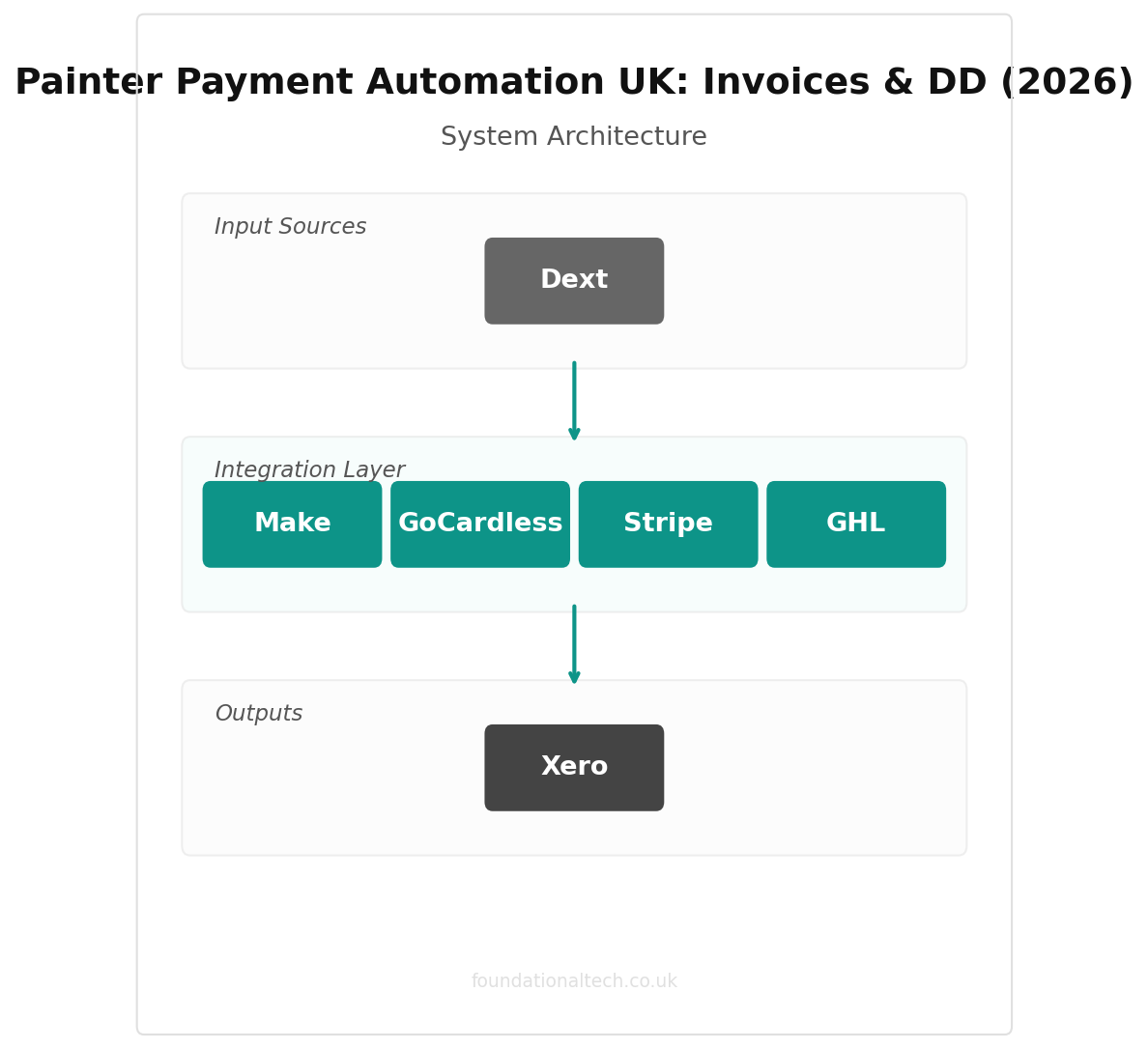
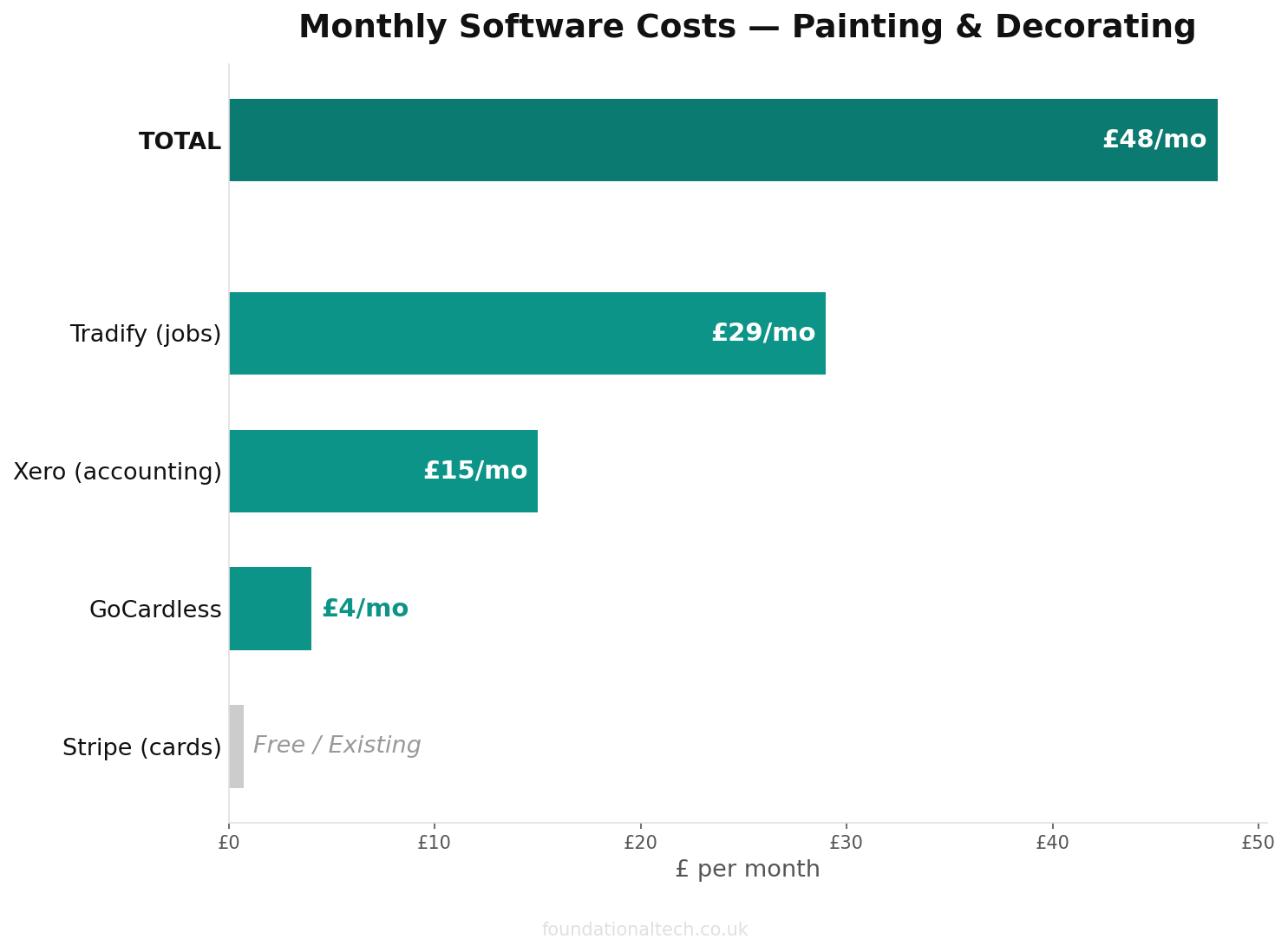
GoCardless is the fix for the letting agent problem. Once an agency or landlord has signed a Direct Debit mandate — a five-minute one-time setup — every future invoice collects on its due date. No chase, no waiting on the monthly batch run, no accounts team deciding when to get to you. The fee is 1% plus 20p and never exceeds £4 per collection, so the £380 void turnaround costs the £4 cap to collect, and the £950 hallway-and-stairs repaint for the same landlord costs no more. An agency client who hands you two or three turnarounds a month belongs on a mandate from the very first job, not the fifth.
Stripe is the fix for the goodwill gap. A "Pay Now" link embedded in the completion invoice, sent while you're still stood in the client's freshly painted hallway, lets her settle the balance before the compliment has worn off. The card fee on a £900 lounge-and-hallway repaint works out at £13.70 (1.5% of the invoice plus 20p) — the price of money landing that evening instead of an invoice quietly ageing on the kitchen counter for a fortnight.
Automated Follow-Ups That Read the Room
The chasing sequence for a decorator needs a different tone to a commercial debt collection letter, because most of your slow payers aren't behaving badly — they're just busy and pleased with their new lounge. Configure Xero's invoice reminders with that in mind:
Day 1 (due date): a friendly note referencing the actual job — "Hope you're enjoying the lounge! Just a reminder that the balance of £[amount] for the repaint is now due — here's the payment link." Naming the room, not just the invoice number, is what makes this land differently to a generic reminder.
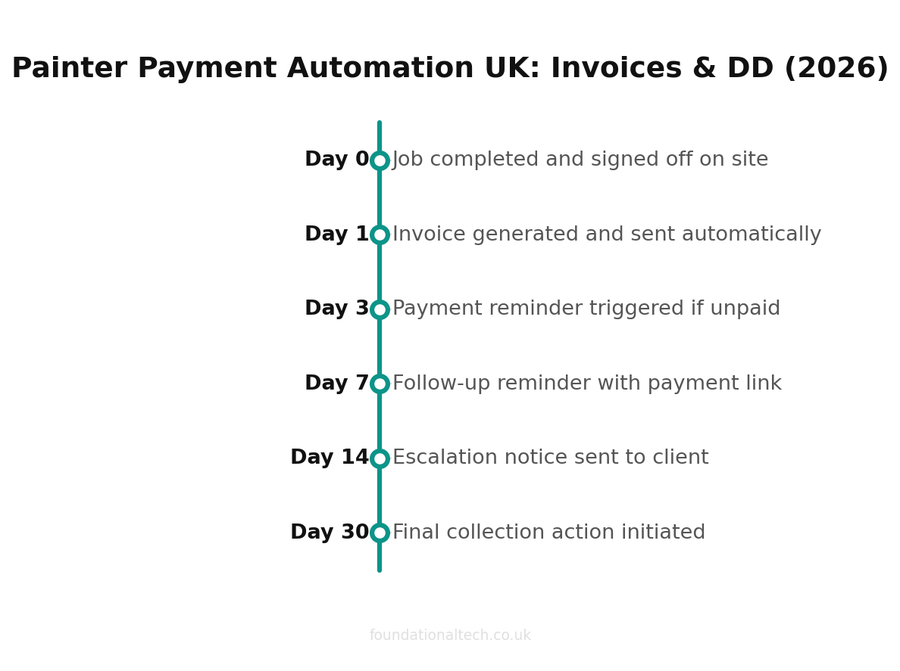
Day 7: the same tone, slightly firmer, with the link repeated.
Day 14: a direct note stating your payment terms and, for landlord or agency clients only, a mention of statutory late-payment interest — the Late Payment of Commercial Debts Act lets you add 8% over the Bank of England base rate, plus a fixed recovery charge, on business-to-business invoices.
Day 30: for agency and commercial clients, a formal final notice. For domestic clients, a personal call — at this point it is very rarely refusal, almost always genuine forgetting, and a two-minute conversation usually resolves it immediately.
Matching Payments to Jobs
Every payment collected through GoCardless or Stripe, or paid by bank transfer, lands in Xero's bank feed and matches to the right job invoice automatically. What remains on your aged debtors list is then a short, honest list of the genuinely unpaid — no scrolling back through the banking app trying to work out whether the £430 that landed last Tuesday was the bathroom balance or the bedroom deposit.
The Trade Account Squeeze
There's a second cash flow gap running underneath all of this, and it has nothing to do with your customers: your Dulux Decorator Centre, Crown Trade or Leyland Trade account runs on its own thirty-day billing cycle, entirely independent of when your client pays you.
Order £450 of paint and sundries for a job on the 3rd of the month, and the trade account statement falls due at the end of that same month — whether or not the client, homeowner or letting agent, has settled your invoice by then. Run several jobs concurrently in a busy month and you can easily have £1,200 to £1,800 of trade account spend falling due while £2,000 or more of client invoices sit unpaid on the other side of the ledger. You are, briefly, funding both ends.
The fix is knowing exactly where each job stands. Tag every trade account purchase to its job in Dext, so you can see at a glance which jobs have had materials bought but no client money in yet. Chase those specifically, rather than treating your whole invoice list as equally urgent. A job where you're still owed the deposit is far more pressing than one where the deposit already covered the paint and only the smaller balance remains.
Smoothing the Quieter Months
Decorating doesn't have a hard seasonal cliff the way outdoor trades do, but it does have a real dip. Exterior work — fascias, cladding, masonry paint — drops off from November through February as the weather and the drying times work against you, and some homeowners simply prefer not to have the house in disarray over the darker months. Interior work continues, but the diary thins.
The practical response is to plan for it rather than be surprised by it each year. Through the busier April-to-October stretch, skim 10-15% of net profit into a separate account Xero can track, and treat it as winter income you've already earned — you know the exterior work stops when the masonry paint won't dry, so let the summer's fascias and render pay for February. And market interior work deliberately into the autumn: a hallway, stairs and landing repaint doesn't care about the weather outside, and clients who've been putting off a lounge refresh all summer are often ready to book it once the nights draw in.
What Changes on £50,000 a Year
Picture a solo decorator on around £50,000 a year — roughly fifteen jobs a month, split between domestic homeowners and two or three regular letting agency clients.
Before automation: invoices raised a day or two after completion, sometimes later if the diary's been busy. Average days-to-payment around 24 for domestic clients, 35-plus for agency work sitting in a monthly batch run. Deposits requested inconsistently, meaning some jobs are fully self-funded from the first tin of paint to the final invoice. Roughly £2,500 to £3,500 sitting in unpaid invoices at any given time, and three or four hours a month spent chasing, mostly by awkward text message.
After automation: balance invoices fire the moment the walkthrough is marked complete. Agency clients sit on GoCardless mandates and pay on schedule without a chase. Domestic clients get a Stripe link while you're still in the hallway, and most pay within 48 hours. Average days-to-payment drops to roughly 6 for domestic work and 16 for agency work. Unpaid invoices at any given time fall to under £1,000, almost entirely genuine short-term lag rather than forgotten admin.
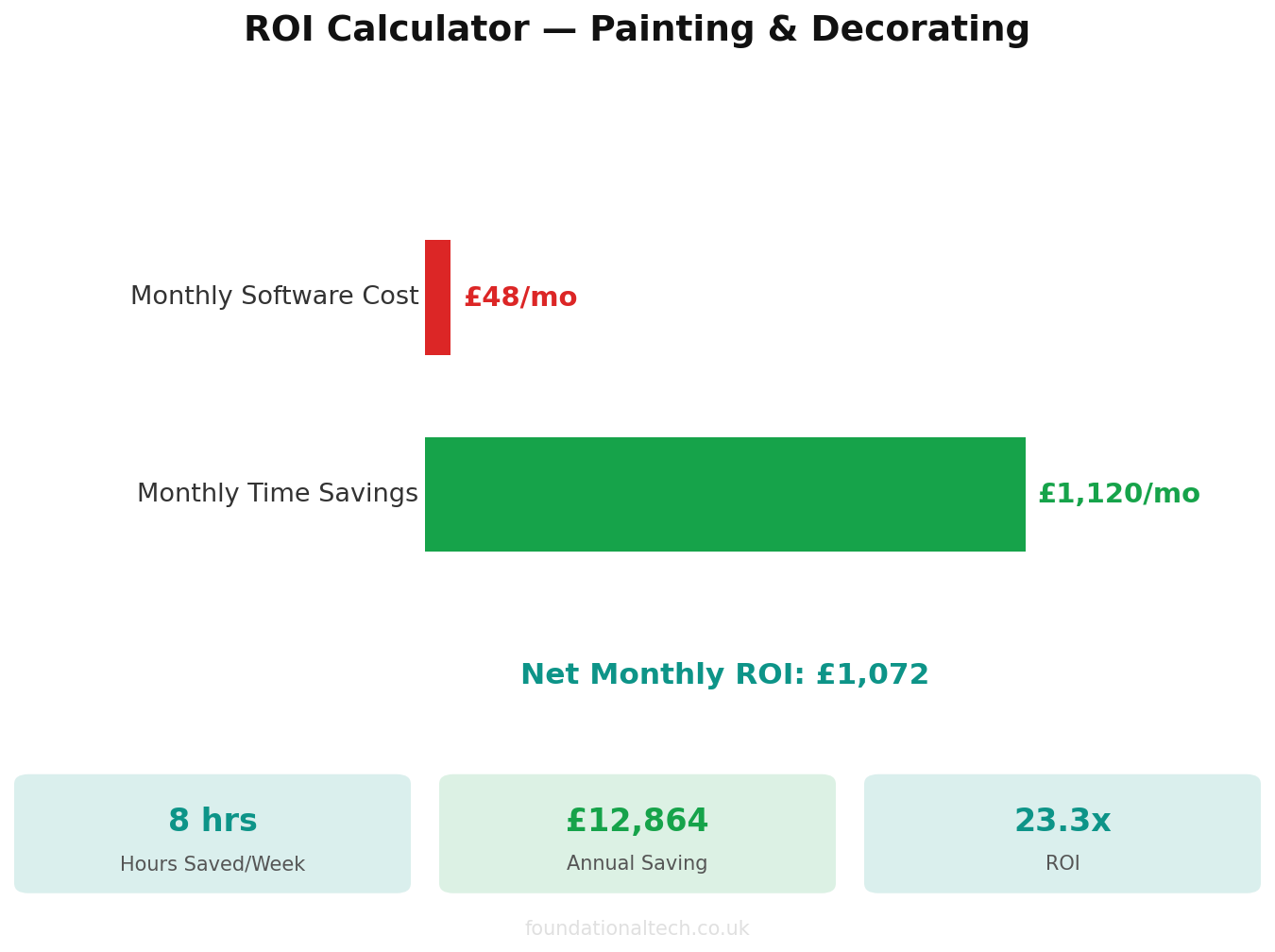
Shortening the wait by two to three weeks on £50,000 of turnover puts roughly £2,000 to £2,800 back within reach at any given moment — money the business had already earned but couldn't yet touch. On a business where the next job's paint order is often funded from the last job's balance payment, that matters. It's the difference between ordering materials the day the quote's accepted and waiting until the previous client finally gets round to paying.
Related guides: If you found this useful, see our guide on 10 AI Prompts for Painters and Decorators: Copy-and-Paste Templates for Quotes, Colour Advice and Getting Paid (2026) and How to Connect YourTradebase, Xero, Dext and Your Dulux Trade Account: The Complete UK Painting and Decorating Integration Map (2026).
When a client stands in the doorway and tells you the lounge looks brilliant, how often does the money follow the compliment that same week? And if you do void and turnaround work for letting agents, would a deposit-plus-walkthrough setup survive contact with their payment runs — or have you found another way round the monthly batch?
See what happens when a client ghosts on payment: The Client Who Loved Her Lounge and Still Forgot to Pay For It.