Key Takeaway
A qualified accountant who helped clients get paid on time could not manage her own cash flow. Here is the automated billing system that finally solved it.
Last October, at about 11pm on a Tuesday, I was sitting at my kitchen table chasing an invoice.
Not a client’s invoice. Mine.
I had a client — a letting agent in Birmingham — who owed me £1,200 for two months of bookkeeping. I’d sent the invoice on the 1st. Followed up on the 15th. Sent a “friendly reminder” on the 28th. Now I was drafting a fourth email, trying to sound firm without sounding desperate, wondering if I should add a late payment fee and knowing I wouldn’t.
And it hit me: I am a qualified accountant. I have spent the last decade helping businesses manage their money. And I cannot get my own clients to pay me within 30 days.
That was the night everything changed.
The problem I couldn't see
Here's the thing about working in finance. You get so close to the machinery that you stop noticing when it's broken. I had spent years helping clients set up Xero, reconcile bank feeds, submit VAT returns. I was good at it. But my own practice was running on the same manual processes I'd been trained on a decade ago.
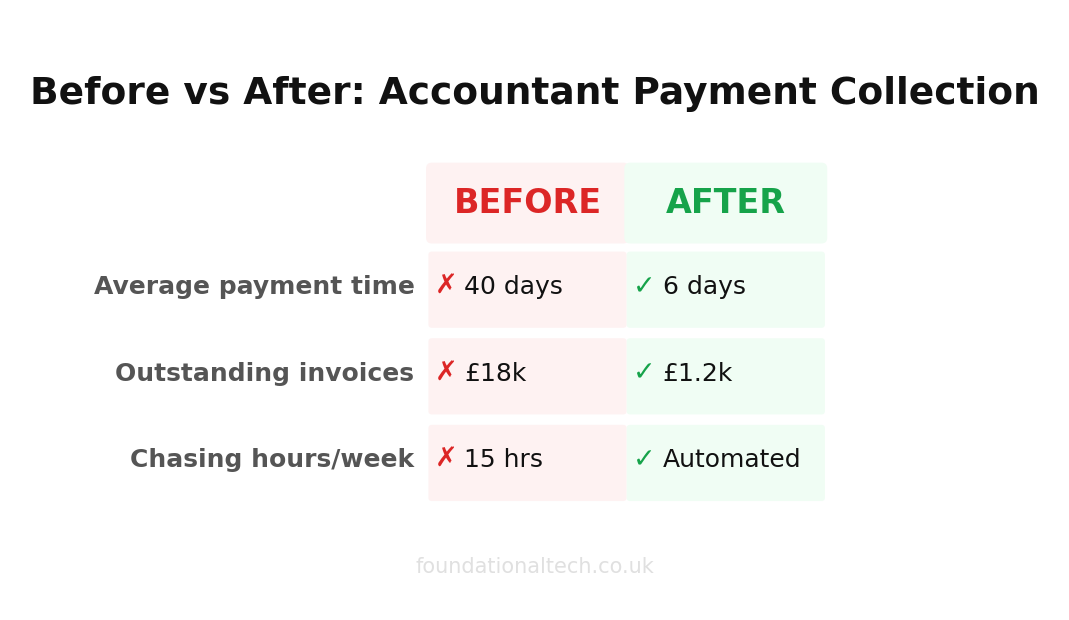
I sent invoices as PDFs attached to emails. I tracked payments in a spreadsheet. I chased late payers with polite emails that got increasingly less polite. When a new client signed up, I'd spend half a day on paperwork — engagement letter, ID checks, anti-money-laundering verification, setting them up in Xero, sending a Dext invitation. Every single step was manual.
I was billing for 40 hours a week and spending 15 of those hours on admin that generated zero revenue.
The worst part? I knew the tools existed. I'd read about Ignition. I'd seen GoCardless integrations in Xero. I just hadn't set them up for myself because I was too busy doing the manual version of the same work.
That's not a technology problem. That's an identity problem. I was an accountant. Accountants do the books. Setting up automated payment systems felt like something a different kind of person would do — a tech person, a startup person. Not me.
What changed
After that Tuesday night, I gave myself a deadline. One weekend. I would automate my own billing or I'd stop complaining about it.
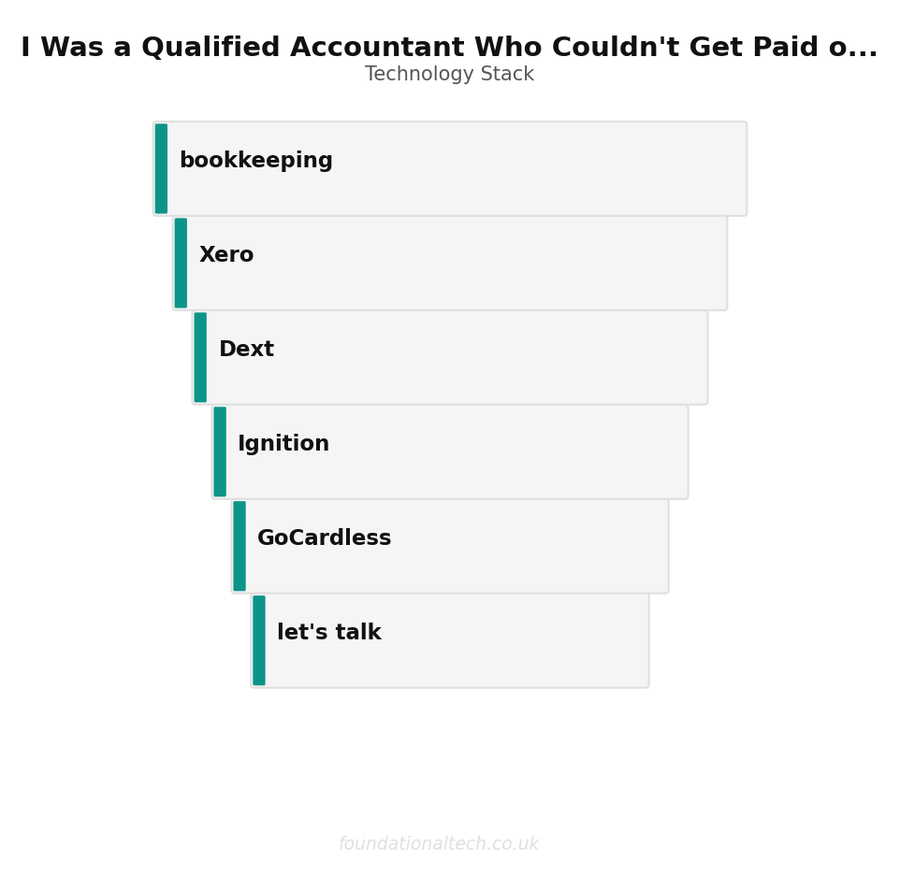
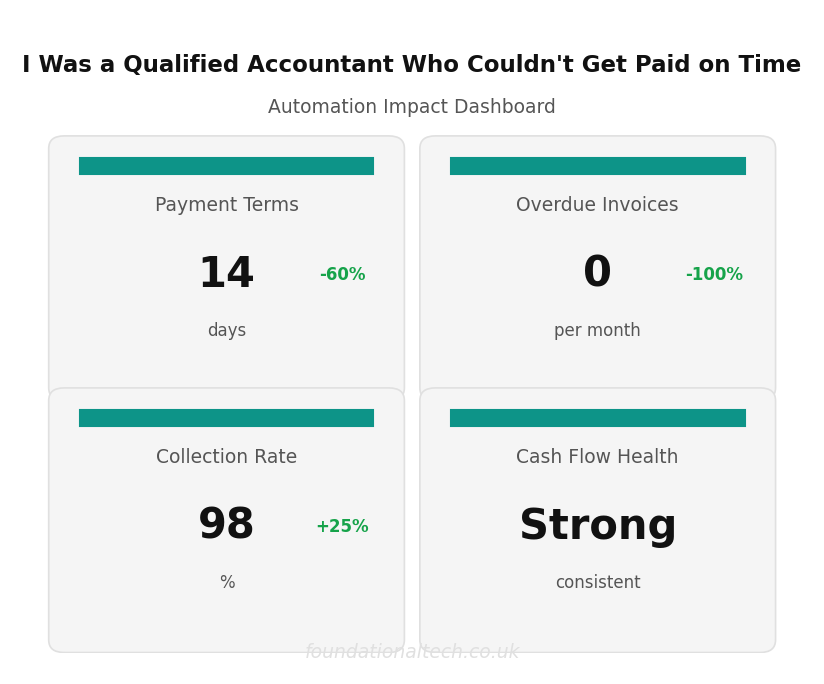
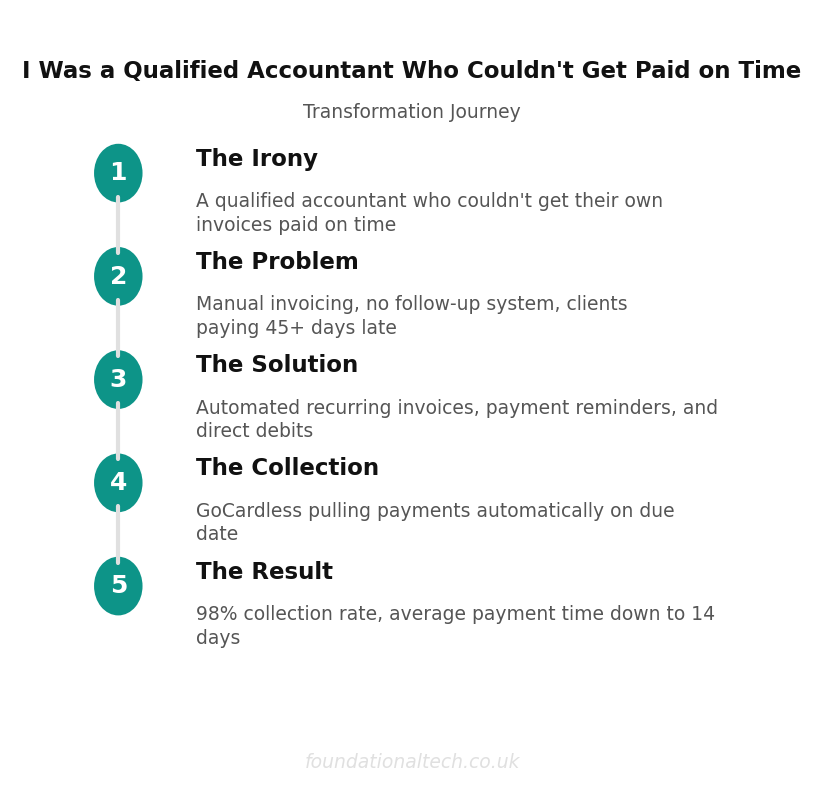
Saturday morning, I set up GoCardless through Xero. Took about 40 minutes, most of which was reading the documentation because I was paranoid about getting it wrong. I created a direct debit mandate template. I sent it to three clients as a test.
By Monday, all three had signed. No chasing. No emails. No awkward conversations. The money would come out automatically on the 1st of every month.
I sat there staring at my screen thinking: I just saved myself roughly 6 hours a month of invoice chasing. In 40 minutes.
The following weekend, I tackled onboarding. I signed up for Ignition, built a proposal template that included the engagement letter, scope of work, and GoCardless mandate all in one document. The next client who said yes got a single link. They signed, authorised the direct debit, and were set up in Xero before I'd finished my coffee on Monday morning.
That process used to take me three to four hours spread across two weeks of email tennis.
What happened next
Within three months, I'd moved every client to direct debit. Not one pushed back — most were relieved they didn't have to remember to pay me. My average days-to-payment went from 38 to zero. Cash flow stopped being something I worried about on the 20th of every month. For the first time in years, I knew exactly what was coming in and when. That certainty changed how I made every other decision in the practice.
Then I started looking at everything else with fresh eyes. Receipt chasing. I was emailing clients every quarter begging for shoebox receipts. I set up Dext, sent each client a download link, and told them to photograph receipts as they got them. Some took to it immediately. Others needed a nudge. But within two months, 80% of my receipt processing was happening automatically.
Bank reconciliation. I'd been manually matching transactions in Xero — hundreds of them every month across a dozen clients. I spent one afternoon setting up bank rules for recurring transactions: rent, utilities, subscriptions, payroll. That afternoon eliminated roughly four hours of reconciliation per week, permanently.
Each change was small. Forty minutes here, an afternoon there. But the compound effect was staggering. By spring, I'd reclaimed nearly 15 hours a week. I used that time to take on 12 new clients without hiring anyone. That's roughly £18,000 in additional annual revenue from time I was previously spending on admin that could have been automated years ago.
The maths still annoys me when I think about it.
The thing nobody tells you about automation
People think automation is about technology. It's not. It's about letting go of the idea that your time doing manual work is what makes you valuable.
I struggled with this more than I'd like to admit. There's something in the accounting profession — maybe in all professional services — that equates visible effort with value. If you're not hunched over a spreadsheet, are you really working? If the invoice goes out automatically, did you really earn the fee?
That mindset nearly killed my practice. While I was spending 15 hours a week on admin, the firms down the road who'd already automated were taking on twice the clients with the same headcount. They weren't better accountants than me. They'd just made the decision I was afraid to make.
The real skill transfer wasn't learning how to use Ignition or GoCardless. Those tools are straightforward — I've written step-by-step guides for both this week. The real skill transfer was accepting that my value wasn't in the manual labour. It was in knowing what to automate and why.
That's what 15 years of accounting experience actually gives you. Not the ability to reconcile a bank feed faster than software can. The ability to look at a business's financial operations and know exactly where the bottlenecks are, which ones matter, and what the fix costs.
Why I'm writing this to you
I started Foundational Tech because I kept having the same conversation. A builder would tell me he spends Sunday evenings doing invoices. A solicitor would mention she has three different systems that don't talk to each other. A restaurant owner would show me a shoebox of receipts.
And every time, I'd think: that was me. Eighteen months ago, that was exactly me.
The difference between me and most of the business owners I talk to isn't knowledge. They know they should automate. They've seen the tools. They've bookmarked the comparison articles. The difference is that I finally ran out of patience with my own excuses. Something about writing that fourth chasing email broke whatever was holding me back.
The accountancy articles we published this week — on automated onboarding and zero-chase collections — are not theoretical. They're the exact systems I built for my own practice first, broke, fixed, and then started building for clients. Every tool recommendation, every pricing detail, every integration step comes from having done it wrong before doing it right.
If you're reading this and thinking "I know I should automate, but I'm too busy to set it up" — I know that feeling intimately. It's the most expensive lie we tell ourselves. The 40 minutes I spent setting up GoCardless has saved me over 70 hours in the last year. That maths doesn't lie, even if your brain tries to argue with it.
£18,000 in late invoices
a qualified accountant who could not get her own clients to pay on time
The shift that matters
I'm not the same accountant I was two years ago. I still do the books. I still file returns. But now I spend most of my time doing the thing that actually matters: helping business owners see what I couldn't see in my own practice. The invisible tax of manual work. The compound cost of "we've always done it this way."
Every week on Foundational Tech, we'll cover a different UK trade and map the exact automation stack that eliminates the admin. Accountancy was first because it's where I started. But the pattern is the same everywhere: identify the bottleneck, find the tool, set it up, move on to the work that actually matters.
The tools are cheaper than you think. The setup is faster than you expect. The hardest part is deciding you're the kind of person who does this.
I decided at 11pm on a Tuesday, writing a fourth payment reminder I shouldn't have needed to send.
What's the one task in your business you know you should automate but keep putting off? Reply and tell me — I've probably put off the same thing myself.
I built A & Y Financial Services to help business owners make this exact transition — from manual operations to automated, AI-enhanced systems. If you're wondering where to start, let's talk.