Key Takeaway
Automate disbursement tracking and expense recovery for UK law firms. Capture, code, and rebill every cost without spreadsheets, delays, or write-offs.
The finance manager at a Leeds firm showed me a box of receipts from the previous month. Forty-seven crumpled slips, twelve of which were completely unreadable. Three had coffee stains that made the VAT number illegible. One was a £340 hotel receipt from a partner who could not remember which client matter it related to. Another was a Land Registry search fee that had been sitting in someone's jacket pocket for six weeks.
I asked her how long she spent each month chasing, sorting, and reconciling these receipts. "Two full days," she said. "Sometimes three." That is two days of a qualified finance professional's time spent doing work that a properly configured system handles in seconds. And the real cost is not her time — it is the disbursements that never get billed back to clients because nobody can match the receipt to a matter.
This is the disbursement drain, and it is quietly eroding the profitability of law firms across the country.
The True Cost of Manual Expense Management
The numbers are worse than most managing partners realise. Industry benchmarks suggest that the average UK law firm loses 5 to 8 per cent of recoverable disbursements through poor tracking. For a 20-fee-earner firm processing £15,000 per month in expenses, that translates to £750 to £1,200 per month in unrecovered costs — money the firm spent on behalf of clients but never billed back.
25 hours/month
spent on manual expense processing for a 20-person law firm
Over a year, that is £9,000 to £14,400 walking out the door. And that figure only captures the direct loss. The indirect costs compound it further:
- Lost VAT recovery: HMRC requires legible receipts to reclaim input VAT. A receipt that has faded, been damaged, or simply gone missing means the firm absorbs the VAT on that purchase. On a £400 hotel bill, that is £66.67 in irrecoverable VAT.
- Finance team time: The end-of-month receipt chase consumes 15 to 25 hours of staff time across a mid-sized firm.
- Late billing: Disbursements that are not captured at the point of purchase often miss the next billing cycle, pushing cash collection out by another 30 days.
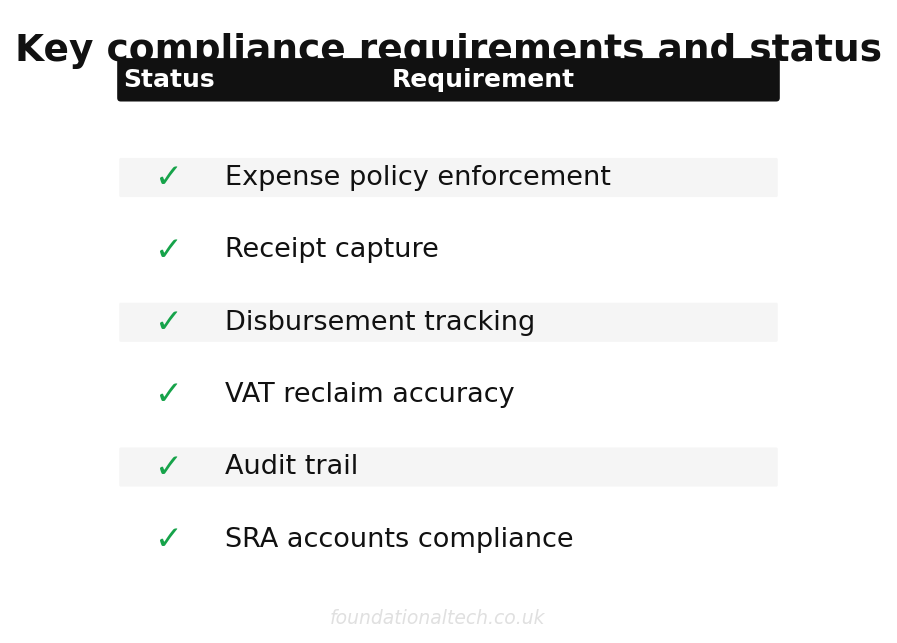
- Audit exposure: Incomplete expense records create vulnerabilities during both HMRC VAT inspections and SRA compliance reviews.
Disbursement Categories Law Firms Must Track
Not all expenses are equal in a legal practice. Disbursements fall into distinct categories, each with different recoverability rules and client billing implications.
- Court fees: Filing fees, hearing fees, and allocation questionnaire fees. Fully recoverable from the client in almost every engagement.
- Counsel's fees: Barrister fees for opinions, conferences, or court appearances. Recoverable and typically billed as a pass-through with no markup.
- Travel and subsistence: Hotels, trains, mileage, and meals. Recoverability depends on the retainer terms — some clients accept these, others cap them or exclude them entirely.
- Search fees: Land Registry searches (£3–6 per title), Companies House searches (£1–7), bankruptcy searches, environmental searches. All recoverable.
- Expert witness fees: Medical reports, forensic accountants, surveyors. Recoverable, often substantial sums.
- Photocopying and printing: At scale, particularly for litigation bundles. Some firms charge per page, others absorb it as overhead.
Each category needs to flow differently through the expense system. Court fees and counsel's fees are always billed to the client. Travel might be partially recoverable. Printing might be absorbed. The expense capture tool must enforce this categorisation at the point of purchase, not weeks later when nobody can remember the context.
The Technology Stack: Tools and UK Pricing
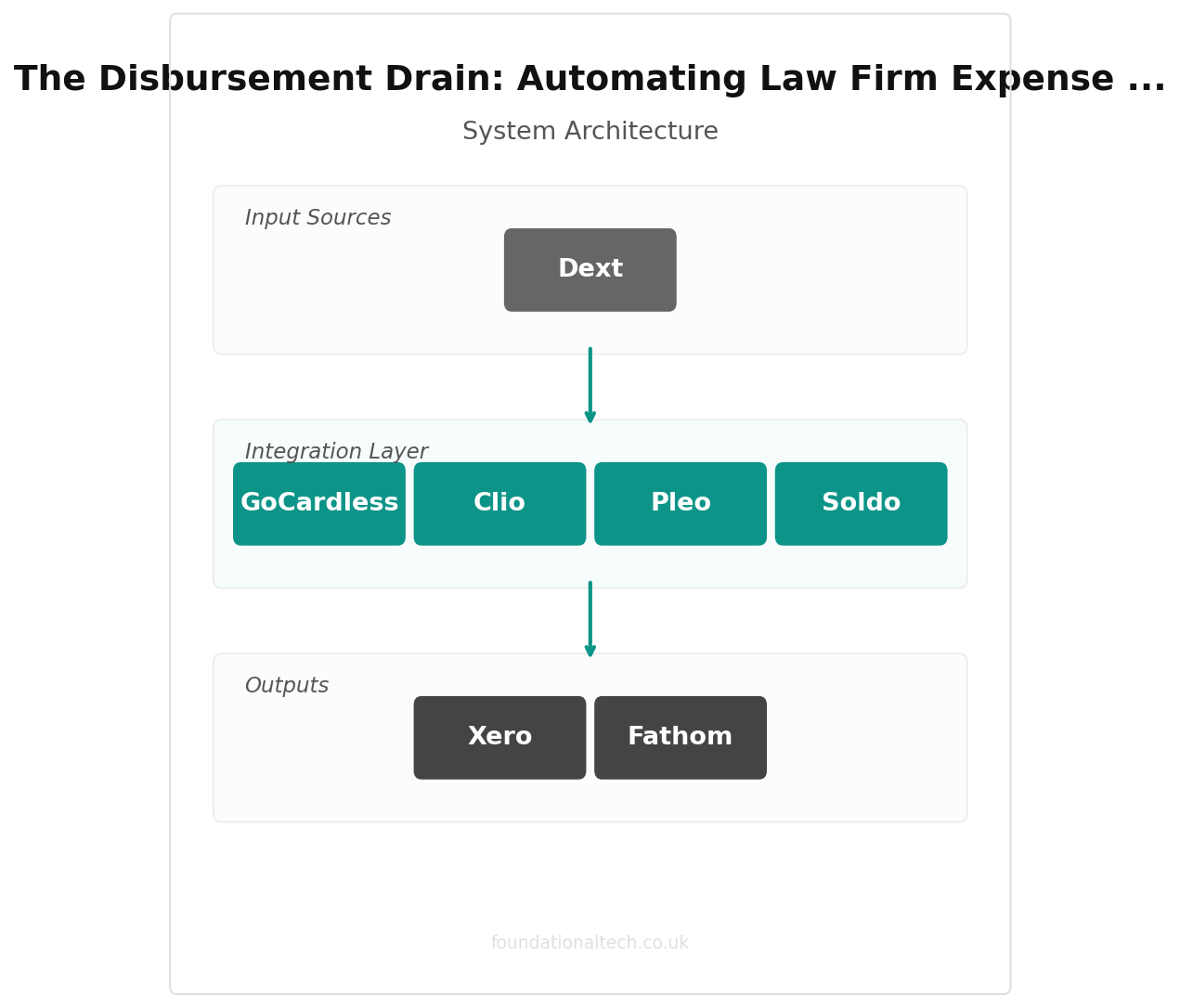
Sealing the disbursement drain requires replacing legacy corporate credit cards and shoebox receipt collection with intelligent spend management software.
The Smart Spend Engine: Pleo
Pleo replaces traditional corporate cards. It issues physical and virtual cards to fee earners with enforced spending limits. When a solicitor pays a £5 court fee or a £500 flight, the Pleo app instantly pings their phone, prompting them to photograph the receipt. OCR extracts the VAT amount, and the app demands the user tag the specific client matter before they can dismiss the notification.
- Starter: Free for up to 3 users — basic expense tracking, no approval workflows
- Essential: £35/user/month — spending limits, receipt capture, basic reporting
- Advanced: £39/user/month — multi-entity management, custom approval workflows, advanced analytics
Law firms need the Advanced plan. The approval workflows are essential — a trainee solicitor should not be able to spend £500 without a partner's sign-off, and multi-entity support matters for firms with separate service companies or associated practices.
If a fee earner refuses to upload a receipt, the system freezes their card. That single feature eliminates the end-of-month receipt chase entirely.
Alternative: Soldo
Soldo starts at £6/user/month plus card fees, making it considerably cheaper than Pleo for larger teams. It offers pre-set budget controls that some firms prefer — you can allocate a fixed monthly float to each fee earner's card and the system hard-stops spending when the limit is reached. The trade-off is a less polished mobile experience and fewer native integrations.
Receipt Capture: Dext (formerly Receipt Bank)
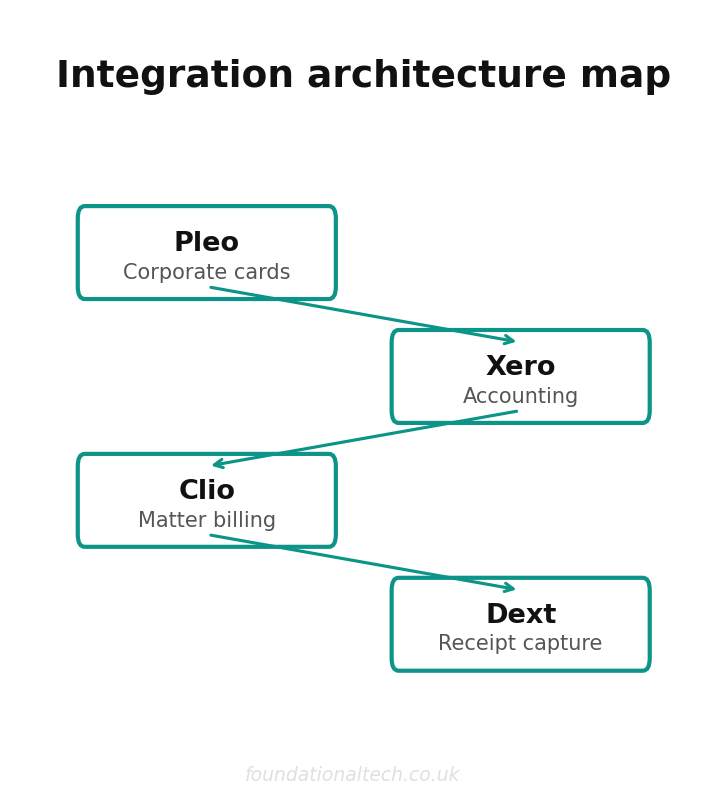
If the firm is not using Pleo's built-in OCR, Dext at £24/month provides dedicated receipt scanning and data extraction. Fee earners photograph receipts or forward email receipts to a unique Dext email address. The software extracts supplier, amount, VAT, and date, then publishes the data to Xero. Dext is particularly useful for firms that want to keep their existing corporate cards but add automated receipt capture.
The Disbursement Router: Xero and Clio Integration
Pleo connects natively to Xero. When a transaction clears, it pushes the categorised expense and digitised receipt directly into the Xero reconciliation feed. Simultaneously, if the expense is tagged as a client disbursement, the data flows into Clio, automatically adding the charge to the client's upcoming invoice.
This integration is the critical piece. Without it, someone in the finance team still has to manually copy expense data from one system to another — which is exactly where errors and omissions creep in.
SRA Accounts Rules Compliance
The SRA Accounts Rules 2019 create specific obligations around expense management that many firms handle poorly.
The fundamental distinction is between client money and office money. When a firm pays a court fee on behalf of a client from the office account, that payment must be billed back to the client. Rule 4.1 requires that client money is kept separate and used only for the purpose for which it is held. If a firm pays disbursements from the office account and fails to bill them promptly, it creates an imbalance that accumulates over time.
The SRA Accounts Rules 2019 also require firms to maintain accurate records of all client transactions. A receipt photograph stored in Pleo, automatically tagged to a client matter and synced to both Xero and Clio, creates an audit trail that satisfies this requirement far more robustly than a crumpled slip in a box.
During an SRA inspection, the ability to pull up every disbursement for a given client matter — with dated receipt images, approval records, and billing confirmation — demonstrates the kind of systematic compliance that inspectors expect. Firms relying on manual processes inevitably have gaps in their records, and those gaps generate uncomfortable questions.
Implementation: A Six-Step Workflow
This deployment is faster than most firms expect. From decision to fully operational typically takes two to three weeks.
Step 1: Audit Current Expense Categories
Before configuring Pleo, map out every type of expense the firm incurs and determine which are recoverable disbursements, which are partially recoverable, and which are pure overhead. Create a Pleo category structure that mirrors these distinctions. This step takes half a day with the finance team and a senior partner.
Step 2: Issue Cards with Spending Limits
Issue virtual cards immediately to all fee earners — they can start using them within minutes. Physical cards follow by post within five working days. Set per-user spending limits based on role: trainees might have a £100 per transaction limit, associates £500, and partners £2,000. Monthly limits should reflect typical disbursement patterns for each practice area.
Step 3: Configure Xero Integration
Connect Pleo to Xero and map each Pleo expense category to the correct nominal code in the chart of accounts. Client disbursements should map to a dedicated disbursements code, not to general overheads. Test with a few small transactions before rolling out firm-wide.
Step 4: Set Up Clio Matter-Tagging
Configure the client matter dropdown in Pleo so that fee earners can tag expenses to specific matters at the point of purchase. This requires exporting the current matter list from Clio and importing it into Pleo's tagging structure. Set up a sync so that new matters in Clio automatically appear in Pleo's dropdown.
Step 5: Train Fee Earners
This is a 15-minute session. Show fee earners how to use the mobile app, photograph a receipt, select the correct category, and tag the client matter. Emphasise the consequence: if you do not upload the receipt, your card freezes. In my experience, compliance reaches 95 per cent within the first week once people understand this.
Step 6: Parallel Run and Cutover
Run the new system alongside the old process for one month. At month end, compare the two — the automated system will invariably capture more expenses, more accurately, with less staff time. Once the firm is confident, retire the old corporate cards and the receipt box.
What It Actually Costs: A 20-Person Firm
Monthly cost for 15 fee earners and 5 support staff (cards for fee earners only):
- Pleo Advanced (15 users): £585/month (15 x £39)
- Xero Standard or Growing: £33–37/month (likely already in place)
- Clio Manage: already in place for practice management
Total incremental cost: approximately £585/month (£7,020/year)
Against a conservative estimate of £750/month in unrecovered disbursements plus £1,500/month in finance team time spent chasing receipts, the system pays for itself within the first month and generates a net saving of approximately £20,000 per year.
The firms I work with that have deployed automated expense management consistently report the same thing: they had no idea how much money they were leaving on the table until they installed a system that captured everything.
GDPR and Data Retention
Expense data contains personal information — employee names, spending patterns, locations visited. Under GDPR, the firm must have a lawful basis for processing this data (legitimate interest in managing business expenses qualifies) and a defined retention policy.
HMRC requires businesses to keep VAT records for six years. The SRA Accounts Rules require retention of accounting records for at least six years from the date of the last entry. Pleo stores receipt images and transaction data indefinitely by default, but the firm should configure its data retention policy to align with these statutory requirements and purge data beyond the retention window.
Fee earners should be informed through the firm's privacy notice that their expense data is processed for business management purposes. This is straightforward to add to an existing employee privacy notice and rarely generates any concern in practice.
The Real-World Pipeline
When automated expense architecture is deployed, the "expense report" ceases to exist. Here is the daily reality:
- The Swipe: A solicitor pays a £250 court filing fee using their virtual Pleo card.
- The Capture: Their phone vibrates instantly. They photograph the receipt and tag it "Smith v Jones Litigation" from the matter dropdown.
- The Ledger: The £250 clears in Xero under "Client Disbursements" with the receipt image attached for HMRC compliance.
- The Invoice: Clio automatically adds a £250 line item to the Smith v Jones monthly bill. The firm recaptures the cash on the next billing cycle.
No chasing. No spreadsheet. No box of crumpled receipts. Every pound spent on behalf of a client is captured, categorised, and billed back automatically.
The finance manager in Leeds I mentioned at the start? She implemented Pleo four months ago. Her monthly receipt reconciliation now takes 45 minutes instead of two days. The firm recovered £3,200 in previously unbilled disbursements in the first quarter alone. And the box of receipts has been replaced by a recycling bin — which is, appropriately, where it always belonged.
For the financial visibility layer, see The Algorithmic CFO: Visualising Real-Time Legal Profitability.