Key Takeaway
Build a real-time profitability dashboard for UK law firms. Track fee earner recovery rates, matter margins, and WIP ageing with automated data feeds.
I sat with a managing partner in Birmingham last autumn who was celebrating what he called "the best billing quarter in the firm's history." His team had pushed through £1.2 million in fees across three practice areas, and the champagne was already on order. Then I opened his Xero ledger and showed him his lockup days.
One hundred and forty-three days. The firm was waiting nearly five months between doing the work and receiving the cash. His record-breaking quarter was a cash flow crisis waiting to happen. Two months later, he arranged a short-term overdraft to cover payroll. The billing numbers had been a mirage.
This scenario plays out across UK legal practices every quarter. Firms celebrate revenue while ignoring the metrics that determine whether the business is solvent. The problem is not a lack of data — it is a lack of visibility. And visibility is precisely what a properly configured financial dashboard provides.
Why Static Spreadsheets Fail Law Firms
Many firms still rely on a monthly Excel export to gauge business health. A bookkeeper pulls numbers from the practice management system, massages them into a spreadsheet, and emails the result to partners two or three weeks after the period closes.
5 KPIs
every UK law firm should track in real-time with Fathom + Xero dashboards
| KPI | What It Measures | Target |
|---|---|---|
| Lock-up Days | Time from work done to cash received | < 90 days |
| WIP Recovery Rate | % of recorded time actually billed | > 85% |
| Debtor Days | Average days from invoice to payment | < 30 days |
| Revenue per Fee Earner | Annual revenue divided by fee earners | £150k+ |
| Profit Margin | Net profit as % of revenue | > 25% |
This is a fatal lag in intelligence. If the real estate department bills 1,000 hours a month, it looks successful on paper. But if it takes that department 90 days to collect payment, it is effectively a cash drain on the rest of the firm. By the time the spreadsheet arrives, the damage is done.
Operating a multi-million-pound practice on 30-day-old data is the equivalent of driving at speed while only looking in the rearview mirror. You cannot steer towards profitability if the instruments on the dashboard are showing you last month's road.
The Five KPIs Every Law Firm Must Track
Before selecting any technology, the firm needs to agree on which metrics actually matter. In my experience working with mid-market UK practices, five KPIs separate well-managed firms from those that stumble into cash crises.
1. Realisation Rate
The ratio of hours billed to clients versus hours actually worked by fee earners. If a solicitor records eight hours on a matter but the partner writes off two hours before invoicing, the realisation rate is 75 per cent. Target: 90 per cent or above.
A consistently low rate usually signals one of two problems: poor scoping at engagement (the fee earner quoted too low and is absorbing the overrun) or inadequate time recording discipline (work is being done but not captured). Either way, the firm is giving away revenue it has already earned.
2. Collection Rate
Cash actually received against invoices sent. A firm billing £500,000 but collecting £450,000 has a 90 per cent collection rate. Target: 95 per cent or above. Low collection rates often point to invoicing problems rather than client payment problems — vague narratives on bills, disputed charges, or invoices sent to the wrong contact all slow payment.
3. Lockup Days
Total days from doing the work to receiving payment, comprising WIP days (how long unbilled work sits before an invoice is raised) plus debtor days (how long the client takes to pay). The UK average for mid-market firms sits between 120 and 150 days, which is frankly appalling.
A firm with £3 million in annual revenue and 140 lockup days has roughly £1.15 million permanently tied up in WIP and unpaid invoices. That is capital the firm cannot use for salaries, investment, or distributions. Reducing lockup by even 20 days releases a significant amount of working capital.
4. Profit Per Equity Partner (PEP)
Net profit after all overheads, salaries, and non-equity partner drawings, divided by the number of equity partners. PEP determines partner remuneration and firm attractiveness for lateral hires. Tracking it monthly — not just at year end — lets the firm course-correct before the annual accounts deliver an unpleasant surprise.
5. Billable Utilisation
The percentage of available hours spent on billable client work versus administration, training, or business development. Target: 65 to 75 per cent for fee earners, 50–60 per cent for partners with management responsibilities. Below target means either too many fee earners for current workload or solicitors being burdened with administrative tasks that support staff should handle.
The Technology Stack: Tools and UK Pricing
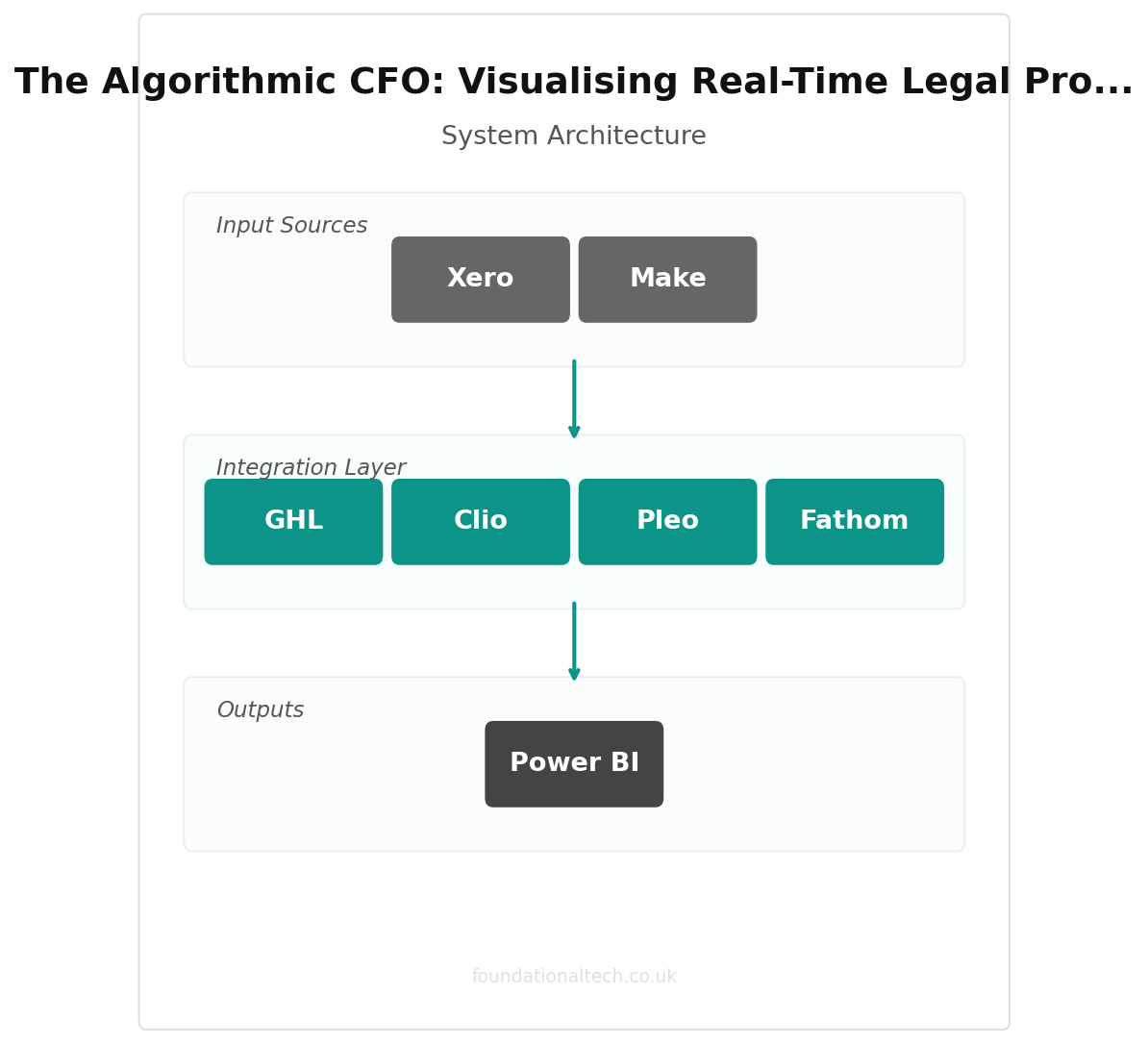
To move from reactive bookkeeping to proactive financial intelligence, a firm needs three layers: an accounting ledger, a practice management system, and a business intelligence engine.
The Master Ledger: Xero
Xero acts as the single source of truth for all financial transactions. Every invoice, payment, expense, and payroll entry flows through it. For law firms, the key requirement is a chart of accounts structured around practice areas rather than generic expense categories.
- Starter: £15/month — limited to 20 invoices per month, insufficient for any active practice
- Standard: £33/month — unlimited invoices, multi-currency support. Suitable for smaller firms
- Growing: £37/month — adds expense claims and project tracking. Required for firms with multiple practice areas or international clients
Practice Management: Clio Manage
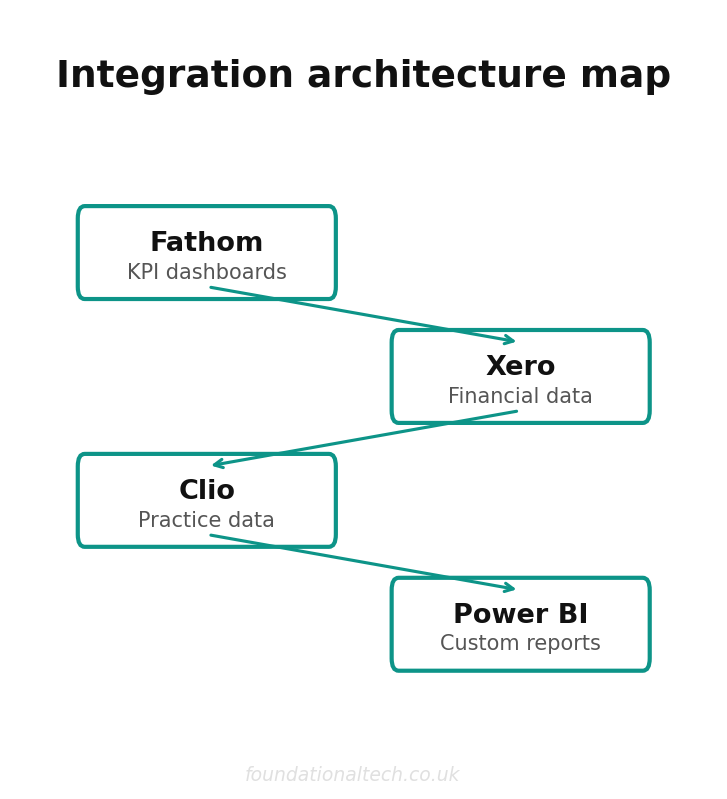
Clio handles time recording, matter management, and client billing. Its native Xero integration means invoices raised in Clio automatically appear in the Xero ledger, eliminating double-entry.
- Starter: £49/user/month — time tracking, basic billing, document management
- Boutique: £69/user/month — adds custom fields, task automation, client portal
- Elite: £89/user/month — advanced reporting, business intelligence, custom dashboards
For meaningful KPI tracking, Boutique or Elite is necessary. The Starter plan lacks the reporting granularity needed to feed useful data into the BI layer.
The Intelligence Engine: Fathom
Fathom connects to Xero via API, pulling data every 24 hours and restructuring it into visual, interactive dashboards. It automatically calculates realisation rate, lockup days, and PEP — provided the Xero chart of accounts is properly structured.
- Single entity: £44/month — one company file, unlimited users, full KPI tracking
- Consolidated reporting: £79/month — for multi-entity firms requiring consolidated accounts
Fathom fundamentally changes partner meetings. Instead of arguing over spreadsheet rows, the team reviews a live chart. Its "Goal Seek" function lets partners model exactly how many additional billable hours are needed to safely hire a new associate or expand into a new practice area.
Alternatives Worth Considering
Syft Analytics offers a similar dashboard capability at £29/month, with strong Xero integration and clean visual reporting. It lacks some of Fathom's forecasting features but excels at departmental P&L tracking and board pack generation.
Power BI is included with Microsoft 365 E5 licences (approximately £50/user/month). For larger firms already on the Microsoft stack, Power BI provides enterprise-grade dashboards with unlimited customisation. The trade-off is setup complexity — Power BI requires data modelling skills to build initial reports, whereas Fathom works out of the box with Xero.
Implementation: A Six-Step Workflow
Done properly, this deployment takes four to six weeks from start to first usable dashboard. Here is the sequence I follow with clients.
Step 1: Clean the Xero Chart of Accounts
Restructure the chart to reflect practice areas. Revenue must be broken down by department — litigation, conveyancing, corporate, family — and overheads allocated where possible. If everything sits in a single "Legal Fees" revenue code, no dashboard in the world can tell you which department is profitable.
Step 2: Connect Clio to Xero
Map Clio invoice line items to the correct Xero revenue codes. If possible, remap the last 12 months of invoices to the new chart of accounts so Fathom has a full year of comparative data from day one.
Step 3: Set Up the Fathom Connection
Connect Fathom to Xero and run the initial data sync. Configure KPI definitions: target realisation rate (90 per cent), collection rate (95 per cent), lockup days, and utilisation percentages by role.
Step 4: Build Department-Level P&L Tracking
Using Fathom's tracking categories (which mirror Xero's), create individual profit and loss statements for each practice area. This is where real insight emerges. A firm might be profitable overall while one department haemorrhages money — without department-level P&Ls, nobody notices until year-end.
Step 5: Create the Partner Dashboard
Build a single-screen dashboard displaying the five core KPIs with drill-down by department. Set alert thresholds: lockup above 100 days turns amber, above 130 turns red. Realisation below 85 per cent for any department triggers immediate review.
Step 6: Schedule Monthly Board Pack Auto-Generation
Fathom generates PDF board packs on a schedule — typically the first working day of each month — including KPI dashboards, department P&Ls, cash flow forecasts, and trend analysis. Partners receive the pack without anyone manually compiling it. This alone saves the finance team eight to ten hours per month.
SRA Accounts Rules: The Compliance Dimension
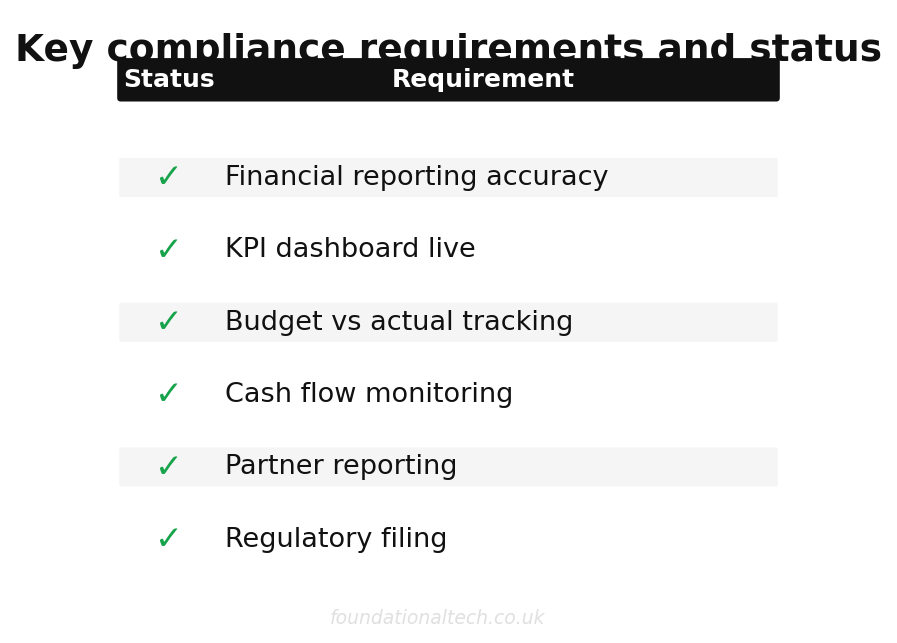
The SRA Accounts Rules 2019 impose strict requirements on how law firms handle client money. Rule 2.1 requires firms to keep client money separate from the firm's own money, and Rule 8.1 requires an accountant's report if the firm holds or receives client money during the accounting period.
A properly configured Fathom dashboard serves as an early warning system for SRA compliance. If the office account dips below required reserves or a client account shows an unexplained deficit, the dashboard flags the anomaly immediately rather than waiting for the annual accountant's report. When the SRA conducts an inspection, 12 months of dashboard data demonstrating continuous monitoring shows a proactive compliance approach that inspectors appreciate.
What It Actually Costs: A 15-Person Firm
Monthly cost for a firm with 10 fee earners, 3 support staff, and 2 equity partners:
- Xero Growing: £37/month
- Clio Manage Boutique (10 fee earners): £690/month (10 x £69)
- Fathom (single entity): £44/month
Total monthly cost: £771 (£9,252/year)
For context, if this stack helps the firm reduce lockup from 140 to 110 days on £2.5 million annual revenue, it releases approximately £205,000 in working capital. The annual cost of the entire stack is under £10,000. The return is not subtle.
If you are currently paying a bookkeeper or part-qualified accountant £2,000–3,000 per month to manually compile management reports, this stack does not just improve the quality of your financial intelligence — it may well reduce your overall cost of producing it.
The Real-World Pipeline in Action
When properly deployed, the firm gains a predictive financial engine rather than a backward-looking reporting tool. Here is how it works in practice:
- The Nightly Sync: At midnight, Fathom pulls the day's cleared invoices, payroll entries, and expenses from Xero. Clio's billing data has already flowed into Xero during the day via the native integration.
- The Analysis: Fathom detects that the litigation department's collection time has slipped from 45 to 62 days over the past fortnight. Simultaneously, the conveyancing team's realisation rate has dropped to 82 per cent.
- The Alert: The partner dashboard flags both metrics — collection days in amber, realisation rate in red. An automated email lands in the managing partner's inbox at 7am with a summary.
- The Action: The managing partner addresses both issues that morning. She instructs the billing team to chase overdue litigation invoices and asks the conveyancing head to review recent write-offs.
- The Feedback Loop: The following week, Fathom shows collection days stabilising and three overdue invoices totalling £47,000 paid. The realisation issue traces to scope creep on a single large matter — the partner adjusts the retainer for future phases.
That is what proactive financial management looks like. Not a quarterly post-mortem over a spreadsheet, but a daily instrument panel that lets the people running the firm make decisions based on what is happening now.
Related guides: If you found this useful, see our guide on The Disbursement Drain: Automating Law Firm Expense Management and The Zero-Touch Intake: Automating Legal Client Acquisition & AML Compliance.
The Birmingham managing partner I mentioned at the start implemented this stack six months ago. His lockup days are down to 98, his realisation rate sits consistently above 92 per cent, and he has not needed an overdraft since. The numbers now warrant the champagne.