Key Takeaway
How UK heat pump & solar installers use Claude and ChatGPT to win more BUS jobs in 2026. Practical AI prompts.
A customer doesn't need to understand SCOP, MIS 3005-D or the difference between a G98 and a G99 application. They need to know three things: will it keep the house warm, what does it actually cost after the grant, and can they trust the person telling them so. Every article in this cluster so far has been about the paperwork that sits behind an install — the heat loss calc, the grant redemption, the compliance file. This one is about the layer that sits in front of it: the explaining, the sizing sense-checks, and the sceptical questions at the kitchen table. That's where a large language model is now doing real work.
What AI Actually Does for a Heat Pump Installer
Strip away the hype and there are five places AI is earning its keep in this trade right now. None of them involve replacing the survey, the design or the commissioning judgement that only a certified installer can make. What it does replace is the hour spent turning technical output into something a non-technical customer, a DNO clerk or an assessor can actually use.
Explaining the Grant Maze Without Losing the Sale
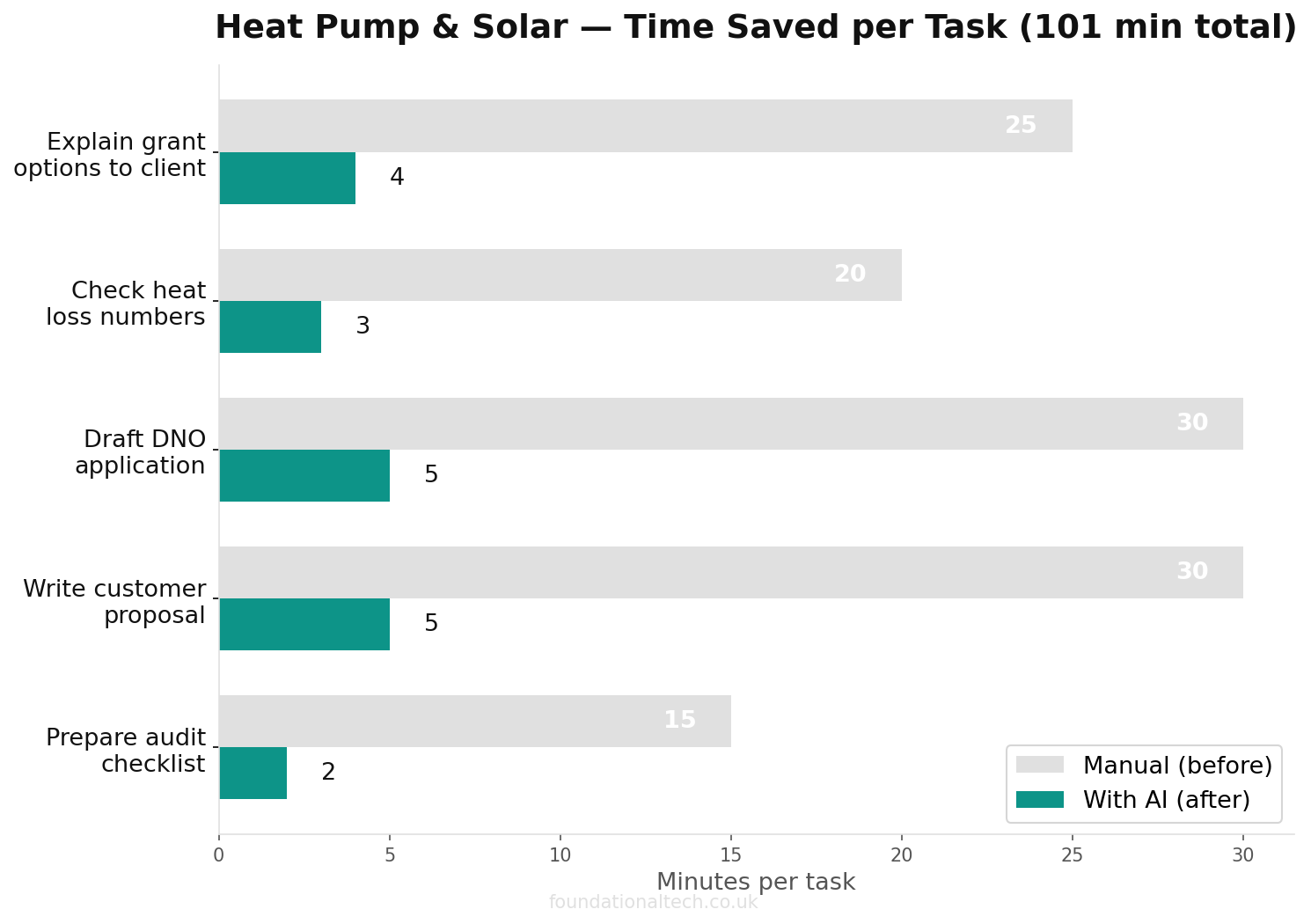
The single most common reason a heat pump quote dies at the kitchen table isn't the price — it's confusion about the price. A customer hears "£13,000, minus a £7,500 grant, so you pay £5,500" and immediately asks four follow-up questions. Is the grant guaranteed, why is VAT zero, does the £9,000 uplift apply to them, and what happens if the paperwork goes wrong? Getting this explanation wrong in person costs you the job on the spot.
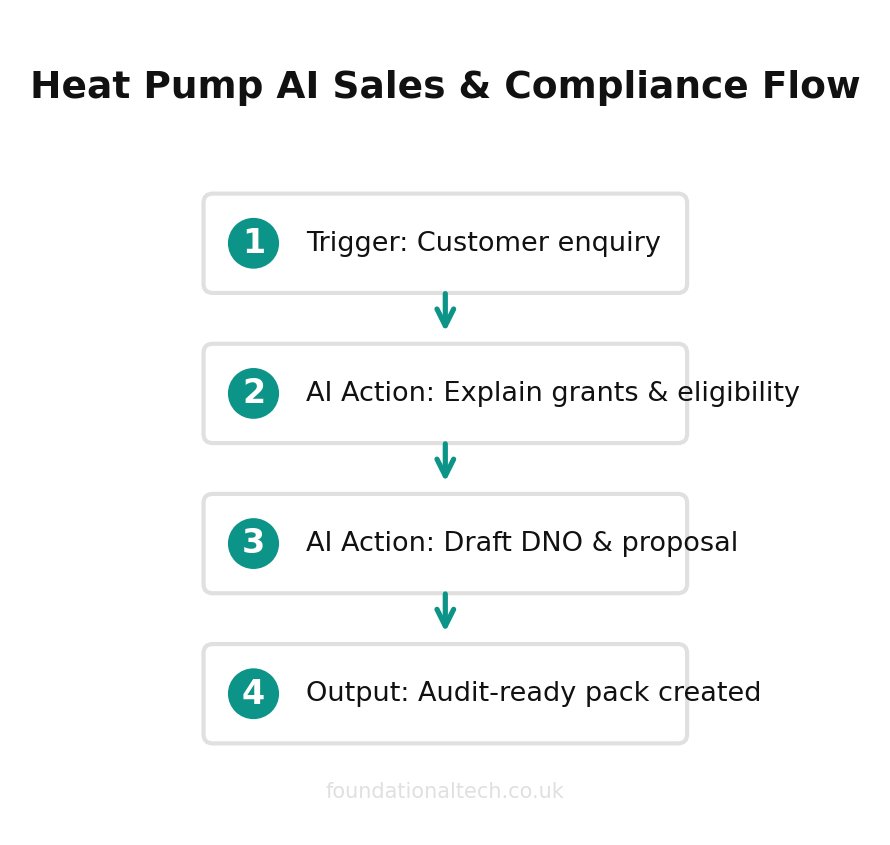

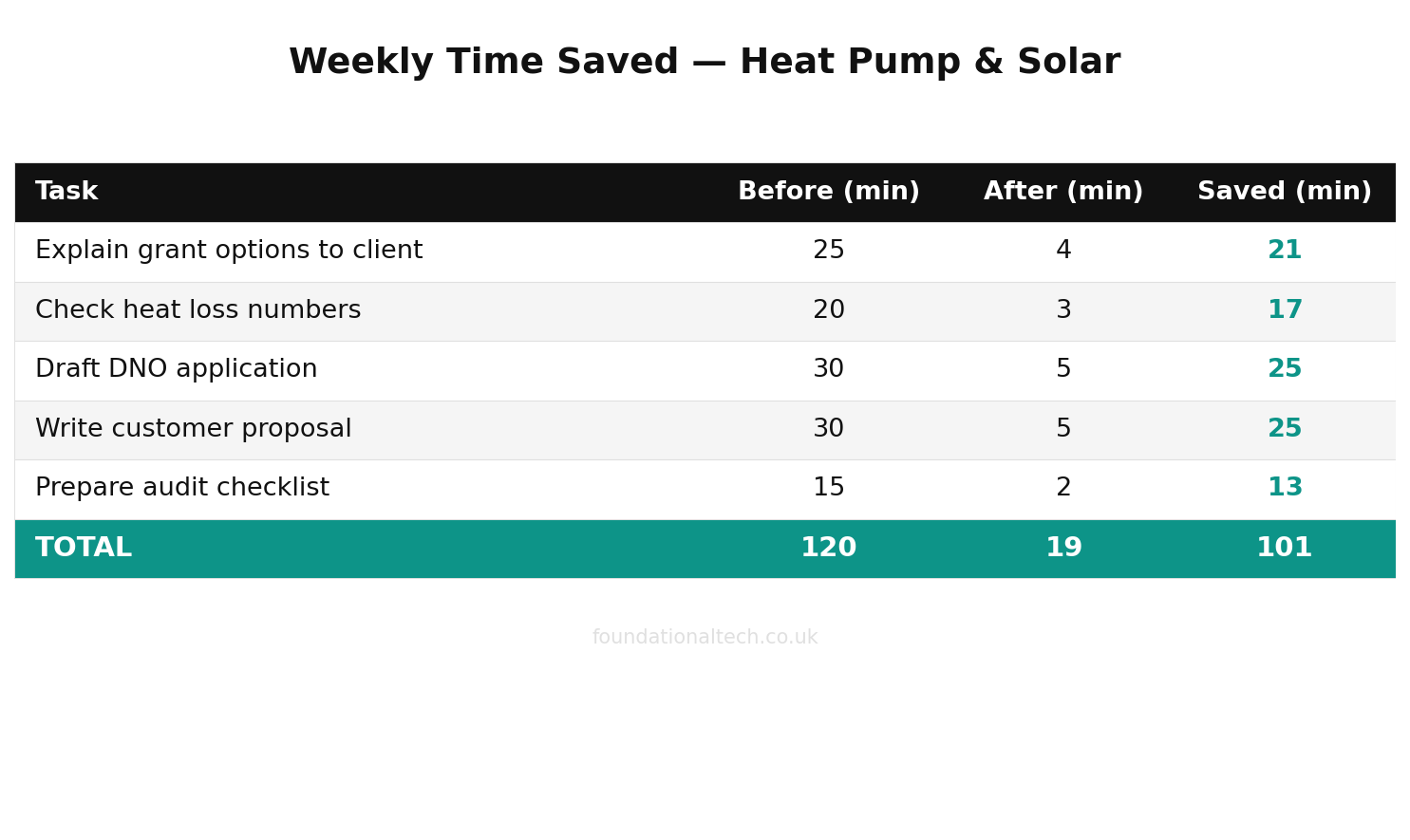
Feed Claude or ChatGPT the customer's actual circumstances — off-gas-grid property, currently oil-fired, install date after 21 July — and ask for a plain-English summary of exactly which BUS band applies and why. No jargon, no hedging language that makes it sound uncertain. The output is a one-paragraph explanation you can read aloud or hand over as a leave-behind, tailored to that property rather than a generic leaflet. It's also useful in reverse: paste in a customer's confused email about "some grant thing my neighbour mentioned" and have it drafted into a clear reply within the hour rather than at 9pm.
A Second Opinion on the Heat Loss Number
Heatpunk and Heat Engineer do the calculation. AI doesn't replace that — MCS won't accept an AI-generated heat loss figure and nor should you want it to. But once you have a number, asking an AI model to sanity-check the inputs against the property description is a genuinely useful second pass. Try: "a 1930s semi, solid brick, 60% double glazed, loft insulation unknown — does a design heat loss of 6.2kW look plausible, and what should I check if it doesn't?" It won't out-calculate the certified tool, but it's very good at catching the kind of input error that produces an obviously wrong result. Think a heat loss figure that's plausible for a new-build landing on a Victorian farmhouse instead. Catching that early means you spot it before you've committed a customer to an undersized system. Ask it to show its reasoning rather than just a verdict. You'll often spot which assumption it's questioning — a loft insulation depth you guessed at, or a glazing ratio that doesn't match the photos. That's exactly where a rushed survey tends to go wrong in the first place.
Drafting the DNO Application Before the Portal Even Opens
Article five named the G98/G99 process as the one part of the stack with no software bridge at all. AI won't submit the form for you — that has to go through the network operator's own portal. But it will draft the supporting technical description from your design data in the time it takes to make a coffee — inverter model, export limitation settings, phase loading. It's all written in the register-required format rather than assembled from a template you half-remember. Paste the draft into the DNO's own form and you've turned a twenty-minute writing job into a two-minute copy-paste.
Talking a Sceptical Customer Off the Ledge
Heat pump scepticism has a fairly predictable shape. Will it actually keep the house warm when it's minus three outside, is the running cost genuinely lower than the gas boiler it's replacing, and will the neighbours hear it running? These are reasonable questions and dodging them loses trust fast. Ask Claude or ChatGPT to draft answers grounded in the actual design figures for that property. Use the calculated flow temperature, the manufacturer's published SPL rating at the proposed unit location, and a real running-cost comparison against their current fuel. That beats the generic reassurance most installers reach for under pressure. The result reads like a technical answer because it is one, just written faster than you'd manage cold.
15% conversion lift
when installers use AI to explain BUS grants and running-cost savings in plain English to hesitant customers
Building Your Own Five-Minute Audit Check
Article four set the standard: any completed job file should survive a five-minute check by someone who wasn't on site. AI is well suited to running that check itself. Paste in the ten-document list against what's actually filed on the job record — certificate number present, DNO reference attached, warranty registration logged — and ask it to flag gaps in plain terms. It won't replace your MCS assessor's judgement, but running your own version of their check before they do catches the missing document while it's a five-minute fix, not a surveillance-visit finding.
Claude vs ChatGPT vs Gemini for a Heat Pump Business
All three mainstream assistants handle the tasks above competently, and the honest differences are narrower than the marketing suggests. Claude Pro is around £19.50–£21/month on a UK card, billed monthly with VAT and exchange-rate movement both folded in, or roughly 15% cheaper paid annually. It's the strongest choice if you're regularly pasting in long technical documents. Think a full MCS handover pack or a lengthy DNO correspondence thread — it holds more context without losing track of earlier detail. ChatGPT Plus (around £19–£20/month, VAT included) has the edge for anyone who wants voice input on site — dictating a survey note hands-free while still holding the tape measure. Its image handling is a shade further ahead too, if you're feeding it photos of nameplates or existing system pipework to identify. Google's Gemini, through Gemini Advanced at £18.99/month (with a cheaper £4.50/month Google AI Plus tier for lighter use), is the natural pick if your business already lives in Gmail and Google Workspace. It drafts and reads directly inside the inbox without a separate app.
Worth a mention for anyone at the sharper end of adopting AI in this trade: a newer entrant called Autarc is building AI tooling specifically for energy installers. That includes an AI phone receptionist that takes booking calls and gathers job details, plus computer-vision-assisted site assessment aimed at cutting survey-to-proposal time. It's early and UK pricing isn't published, but it's a sign of where vertical, trade-specific AI tools in this space are heading, beyond the general-purpose assistants above.
What AI Can't Do — and Where MCS Still Requires a Human Signature
Be precise about the boundary, because getting it wrong in this trade has consequences a bad quote in another trade doesn't. AI cannot perform or certify a heat loss calculation to MIS 3005-D — that has to come from Heatpunk, Heat Engineer or an equivalent MCS-recognised tool, run by a certified person. It cannot commission a system, sign an MCS certificate, or stand in as your scheme's "technical supervisor" — those are named, accountable roles under the redeveloped MCS scheme, and no AI output carries that accountability. It cannot assess G3 unvented cylinder compliance or make the judgement call on whether a property's fabric genuinely supports the flow temperature you've designed to — that's professional judgement, not a drafting task. And it should never touch anything gas-adjacent involving F-Gas handling on split systems, where the legal responsibility sits with a certified individual, full stop.
Used correctly, AI is doing the explaining and the drafting around your technical decisions — not making them.
Try It On One Real Quote Before You Trust It
The fastest way to find out whether any of this earns a place in your business is to run it against a job you already know cold. Take a heat loss figure and property description from an install you completed last year, paste both into Claude or ChatGPT with the grant-explainer prompt above. Then read the output the way the customer would have — at the kitchen table, with no technical background. If it's clear, accurate and matches the numbers you actually quoted, you've found a genuine time-saver. If it fudges the VAT position or overstates the grant certainty, you've learned that before it went anywhere near a live customer. That's exactly the point of testing on a job you already understand rather than one you're mid-quote on.
Two More Articles, Then the Prompts Themselves
The next two articles get specific. Article seven is a set of copy-and-paste prompts built for this exact trade — the grant explainer, the DNO technical description, the sceptical-customer script, ready to adapt rather than write from scratch. Article eight walks through setting up a dedicated AI assistant trained on your own price book, your own BUS eligibility criteria and your own standard answers. Every reply then carries your voice rather than a generic one.
Which of these costs you the most time right now — explaining the grant at the kitchen table, answering the "will it actually work" question, or drafting the DNO paperwork? Reply and tell me; I'm building the Prompt Playbook around whichever comes up most.
For the backstory, read The Heat Pump Installer Who Thought Ofgem Was the Problem.