Key Takeaway
12 ready-to-use AI prompts for UK electricians — quotes, BS 7671 specs, customer emails and job descriptions. Copy, paste into ChatGPT or Claude, done.
Most electricians try AI exactly once. They open ChatGPT, type "write me a quote," get back something that reads like a mortgage offer, and decide the whole thing is a gimmick for marketing types. The tool was never the problem. The instruction was.
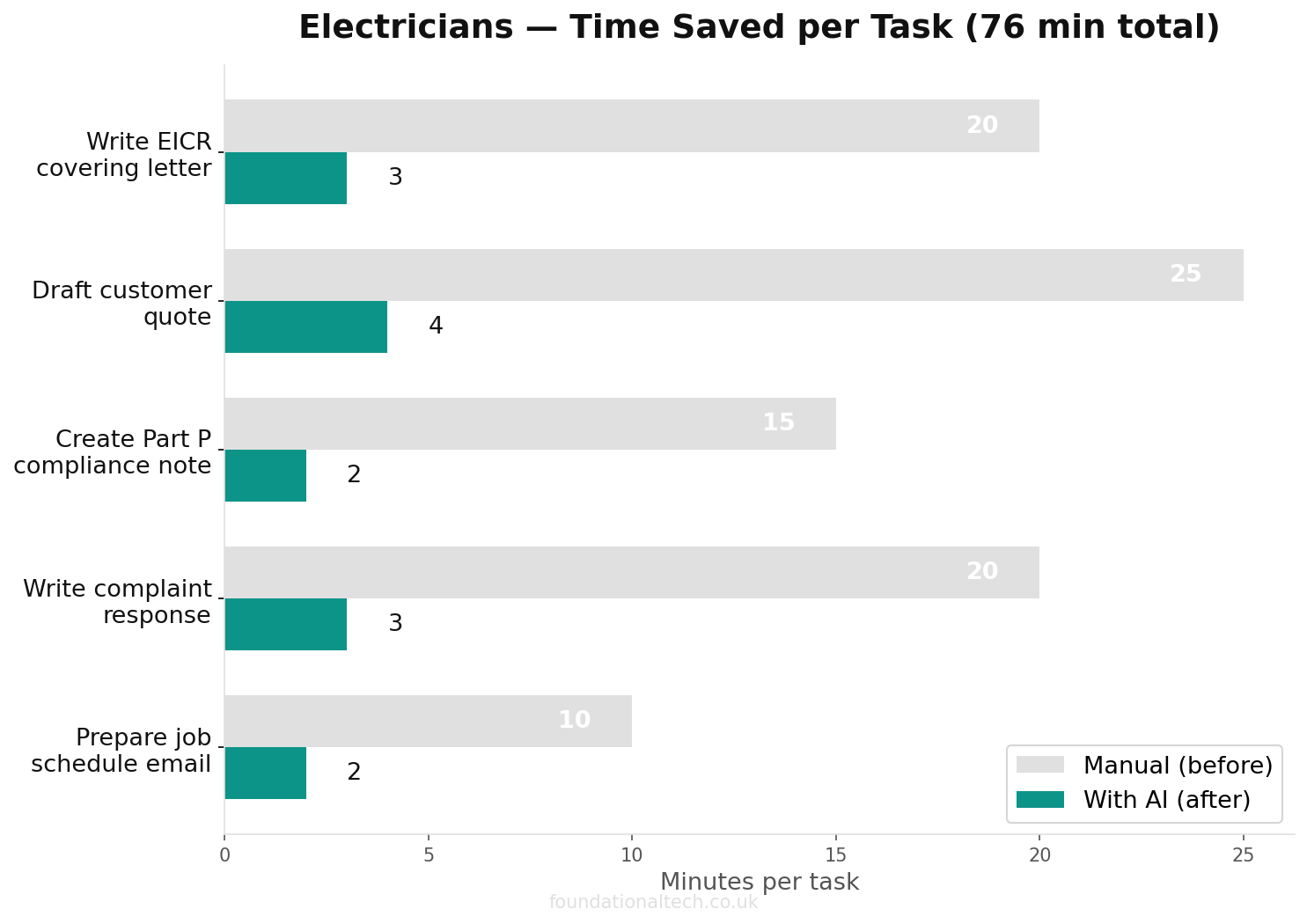
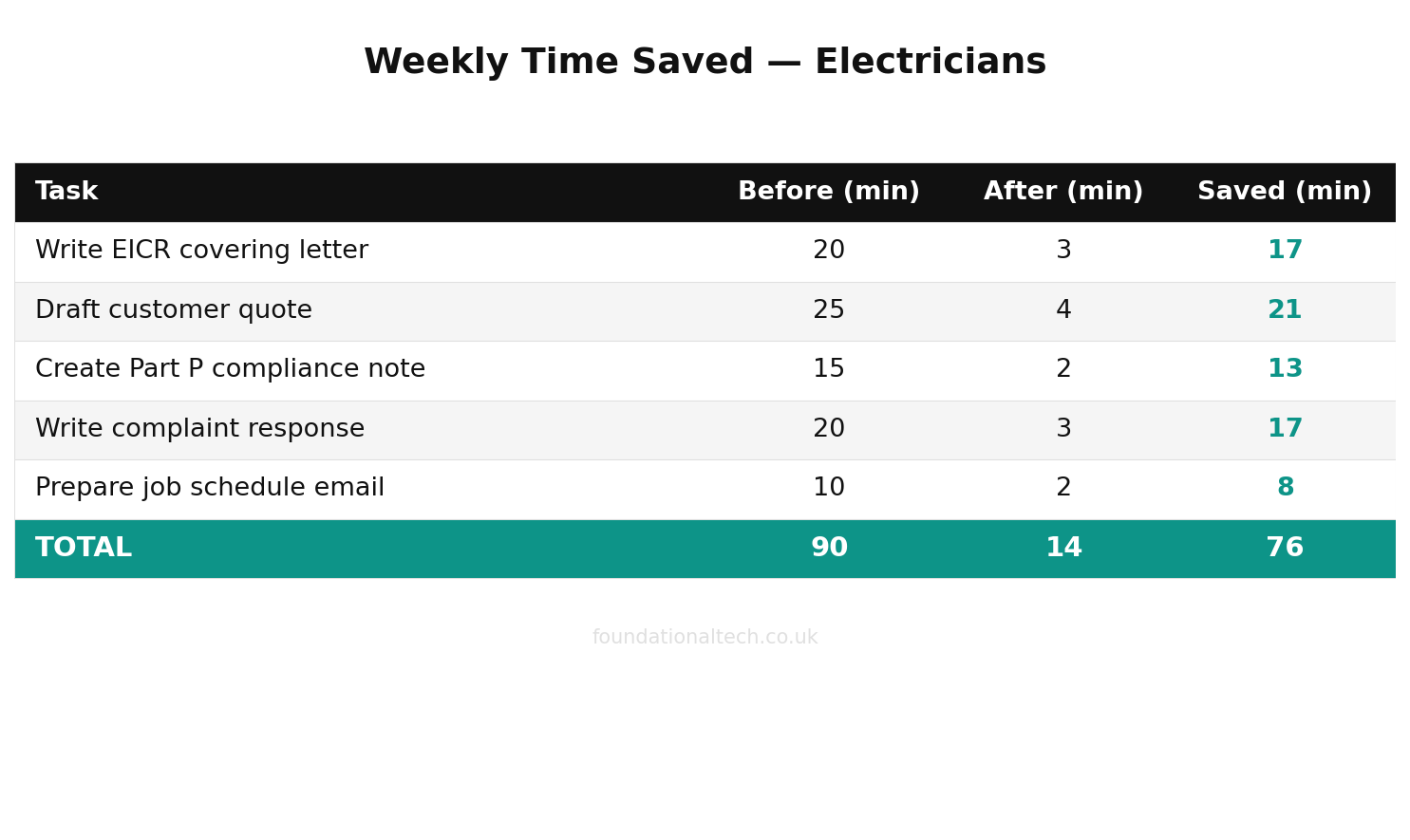
30 min → 3 sec
Average time to draft a professional electrical document — manual vs AI-assisted
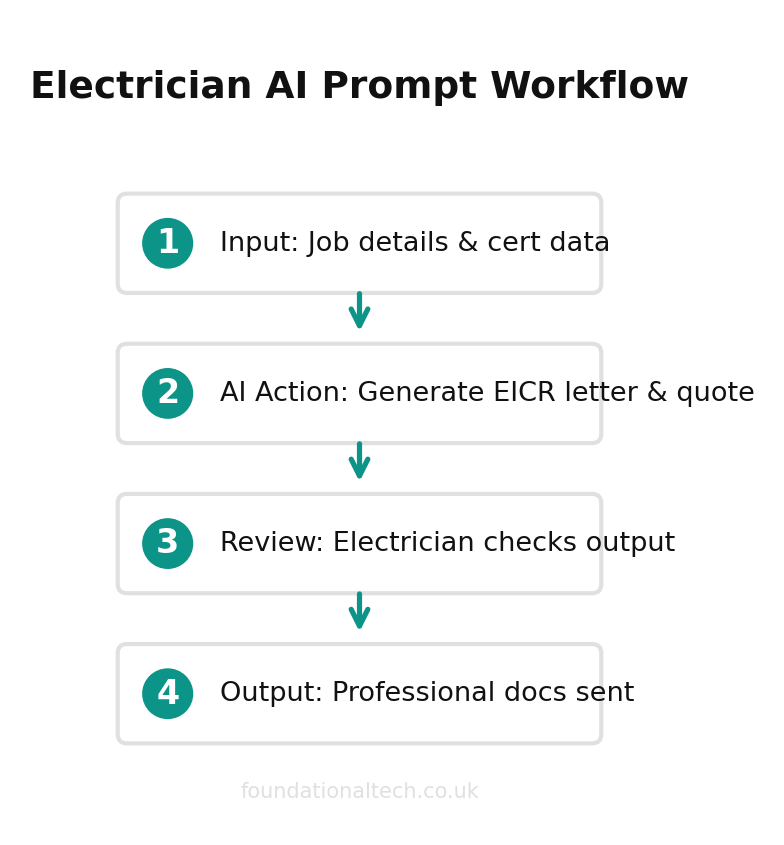
A prompt is just a brief handed to a very fast assistant who knows nothing about your business until you tell it. Give it a vague brief and you get vague work. Give it the customer, the tone, the job and the rules, and it writes the quote you would have written at the kitchen table — in four seconds instead of forty minutes. Below are twelve prompts built for a UK electrical business. Paste them in, swap the bits in brackets for your own details, and skip the year of trial and error most people waste working out what to type.
The first five are free. The rest are the ones that save the most hours.
Why Generic Prompts Don't Work for Electricians
"Write a quote" gives you generic rubbish because you handed over a generic instruction. The AI has no idea you charge £45 an hour, that you itemise materials separately, or that a consumer unit swap on a 1930s property needs RCBOs and a fresh set of circuit tests. It does not know your customers are mostly worried homeowners who want plain English, not regulation numbers. So it guesses, and its guesses read like everyone else's guesses.
The fix is dull and it works: tell it who the customer is, what tone you use, what the job involves, and what format you want back. A prompt that names the customer, the work, the price structure and three rules will beat a one-line request by a mile. Every prompt below is built that way. They look long because the detail is the whole point — the detail is what stops the output sounding like a robot wrote it.
One rule sits over all of them, and it never changes: AI writes and reads; you and your tools decide and calculate. Never ask these prompts to set a price, work out VAT, or — most importantly — generate an EICR, an Electrical Installation Certificate, a Minor Works Certificate or a Part P building regulations notification. Those are legal documents tied to your competent-person registration with NICEIC, NAPIT or your scheme of choice, and to your liability. Ask the AI to draft, summarise, reformat and chase. That is where it is brilliant, fast and safe.
These prompts work in the free version of ChatGPT, Claude or Google Gemini, so you can test every one of them this week without paying a penny. If you decide to upgrade, the paid tiers all sit in the same ballpark. ChatGPT Plus is £20 a month — VAT is added at checkout. Claude Pro is around £18 a month, or about £14 a month (£168 a year) if you pay for the year up front. Google's entry paid tier, AI Plus, is £4.50 a month. You do not need more than one to run everything below.
The Prompts
1. The itemised quote from rough survey notes
Write a clear, itemised quote for a domestic electrical customer from the
rough notes below. Tone: friendly and professional, plain English, no
jargon. Lay out labour and materials as separate lines. Leave any price
I haven't given as a [SQUARE BRACKET] for me to fill in — do NOT invent
prices or VAT. End with how long the quote is valid and how to accept.

My notes:
[consumer unit upgrade, 1930s semi in Leeds, old rewireable fuse board,
fit new board with RCBOs, full set of tests, 1 day, customer worried
about cost]
When to use: every quote you would otherwise scribble on the van dashboard or put off until 9pm. Time saved: 30–40 minutes a quote, and you win more of them because a tidy quote beats a rushed one every time.
2. The payment chaser — three escalating versions
A customer hasn't paid an invoice. Draft THREE reminder emails in my
voice (polite but firm, never aggressive), each under 120 words:
1. Gentle nudge — assumes they simply forgot
2. Firmer — states the invoice is now [X] days overdue
3. Final reminder before late-payment charges and pausing further work
Don't threaten legal action or invent figures. Here are the details:
[invoice number, amount, date due, what the job was]
When to use: the reminder you can never find the right words for when you are annoyed. Time saved: the 20 minutes of irritation every time — pick a version, drop in the numbers, send.
3. The booking confirmation and morning reminder
Write two short messages for an electrical customer in my voice (warm,
clear, professional):
1. A booking confirmation — date, rough arrival window, what I'll be
   doing, whether the power will be off and for how long, and anything
   they need to do first (clear access to the consumer unit, move
   furniture, etc.)
2. A reminder to send the morning of the job.
Keep both under 80 words. Details:
[job, date, time window, address, expected power-off, any prep needed]
When to use: every booking — confirmations cut no-shows and "what time are you coming?" calls. Time saved: a few minutes each, but it kills the phone tag that eats your day.
4. Explaining the problem to a worried customer
Explain the following electrical issue to a non-technical homeowner who
is worried about it. Plain English, reassuring but honest, no jargon,
under 150 words. Cover: what's likely happening, whether it's urgent and
safe to use in the meantime, and what their options are. Don't diagnose
with certainty from limited info — say where I'd need to inspect on-site.

The issue:
[customer says a socket in the kitchen is warm to the touch and the trip
keeps going when they use the kettle]
When to use: the messages and calls where a customer wants to understand what is wrong before they will book. Time saved: turns a ten-minute explanation you give weekly into a reusable template.
5. The job-done social post
Write a short, friendly Facebook/Google post about a job I've just
finished. No jargon, no hashtag overload (max 3), sound like a real local
electrician not a marketing agency. Under 80 words. Encourage local
readers to get in touch. The job:
[full rewire on a three-bed semi in Headingley, new consumer unit,
downlights through the ground floor, 4 days, very happy customer]
When to use: after any job worth showing off — the marketing you know you should do and never do. Time saved: ten seconds versus the twenty minutes of staring at a blank box, which usually ends in not posting at all.
6. A month of social posts from one list
Here are [5] jobs I've done recently. Write me [8] short social media
posts I can schedule over the next month — a mix of finished-job
showcases, a seasonal safety tip (e.g. don't overload sockets at
Christmas), and a gentle "now taking bookings" post. Friendly
local-electrician tone, plain English, each under 80 words, no more than
3 hashtags each. Vary the openings so they don't all sound the same.

The jobs:
[list 5 recent jobs with a line each]
When to use: once a month, in fifteen minutes, to fill your whole social calendar. Time saved: the single biggest marketing job of the month, done in one sitting.
7. The landlord / letting agent chase — with EICR covering note
Draft a polite, professional email to a letting agent who hasn't booked
the five-yearly EICR on a rental property I look after. Remind them it's
a legal requirement under the rented-property electrical safety rules and
that the current certificate expires on [date].
Then draft a SEPARATE short covering note I can send WITH the completed
EICR once the inspection is done, in plain English for the landlord's
records, summarising that the installation was found satisfactory (or
listing any remedial work needed).
IMPORTANT: do not generate the EICR itself — only the email and the
covering note. Property and dates:
[address, certificate expiry date, tenant access notes]
When to use: managing landlord work, where the chasing is half the job. Time saved: keeps your rental clients compliant without you writing the same email twenty times a year.
8. The EICR findings, translated for the customer
I've completed an EICR and recorded the observations below with their
codes. Write a short, calm summary for a non-technical landlord or
homeowner explaining, in plain English: what each code means, whether
the property is satisfactory or unsatisfactory overall, which items are
urgent, and that I can quote to put the remedial work right. Reassuring
but honest, under 200 words. Do NOT change my codes or invent findings —
only explain what I've written.

My observations:
[e.g. C2 — no RCD protection on socket circuits; C3 — no main bonding to
gas; FI — junction box inaccessible above ceiling, needs investigation]
When to use: after every inspection that comes back with codes a customer will panic about. Time saved: turns the confused follow-up calls into a single clear note — and routinely turns the report into remedial work.
9. The wholesaler statement check
Here is a statement from my electrical wholesaler. List clearly: 1) which
invoices on it I appear NOT to have paid, 2) the total outstanding, and
3) any duplicates or anything that looks wrong. Lay it out as a simple
table. Do not change any figures — just read and organise what's here.

The statement:
[paste the statement text]
When to use: when a CEF or Rexel statement lands and you cannot face cross-checking it by hand. Time saved: half an hour of squinting at a printout, and it catches the double-charges you would miss.
10. The plain-English job sheet
Turn these job notes into a clean, professional work summary I can give
the customer for their records. Plain English so a homeowner understands
exactly what was done and why. Include: work carried out, any parts or
accessories replaced, test results in plain terms (not the certificate
itself), and any recommendations for next time. Under 200 words. Notes:
[rough notes from the job — what you found, what you did, parts used]
When to use: after a fault-find or remedial job, when the customer wants something in writing. Time saved: a professional record in two minutes that makes you look twice as organised as the next sparks.
11. The review reply pack
Here are some recent Google reviews of my electrical business. Draft a
short, warm, personal reply to each — thank them, mention something
specific from their review, and sound like a real person not a template.
For any negative review, draft a calm, professional reply that takes the
issue seriously and offers to put it right offline. Reviews:
[paste reviews]
When to use: the reviews you mean to reply to and never do — replies that future customers read. Time saved: clears a backlog of replies in one go and lifts how your business looks on Google.
12. The quote follow-up
I sent a customer a quote [X] days ago and haven't heard back. Write me a
short, no-pressure follow-up that checks whether they have any questions
and gently asks if they'd like to go ahead, without sounding desperate or
pushy. Under 90 words, friendly and professional. Context:
[the job, the quote amount, how long ago you sent it]
When to use: on every quote that goes quiet — the follow-up most electricians never send. Time saved: minutes to write, and it recovers jobs you would otherwise have lost to silence.
How to Get the Most Out of These
Two habits double what you get back. First, the more you tell the AI about your business, the better it gets — paste in an old quote you were happy with and say "match this style," and every quote after sounds like you, not a call centre. Second, treat the first answer as a draft from a keen apprentice: quick, useful, and always read before it leaves your hands. The AI will sometimes invent a price, a part number or a regulation with total confidence. You catch it because you know the job. It never signs anything off and it never issues a certificate — you do.
Start with one. Pick the prompt for the task you dread most — for most electricians that is quoting — and use it on your very next job this week. Once it has saved you an evening, the rest will follow.
Related guides: If you found this useful, see our guide on The Electrical Business That Runs Itself: How UK Electricians Are Automating Everything in 2026 and How UK Electricians Are Using AI to Cut Admin Time (Without Sounding Like a Robot).
Which of these twelve are you going to try first — and what's the one electrical task you'd most want a prompt for that isn't on the list? Reply and tell me; I'm building the next batch from real requests.
Not sure AI belongs in your trade? Read The Electrician Who Was Sure I’d Come to Take His Job.