Key Takeaway
Stop chasing late payments as a UK scaffolding contractor. Automated invoicing, retention and the 60-day cap in 2026.
Denise Okafor closed out a nine-month industrial contract in Grimsby in March, dismantled the last lift, and raised her final invoice the same afternoon. The labour was paid. The tube was paid. What wasn’t paid — what still isn’t paid, fourteen months later — is the 5% retention the principal contractor withheld from every application throughout the job. Just over £11,000, sitting in someone else’s bank account until the defects liability period closes in May next year.
That’s not a late payment. It’s not a dispute. It’s a completely standard, contractually agreed feature of how scaffolding gets paid for on anything beyond small domestic jobs. And it’s about to change — awkwardly for anyone caught mid-contract, but for once genuinely in scaffolding’s favour.
Three Separate Delays, Not One
Most trades in this series deal with a single payment gap: job finishes, invoice goes out, client pays in 30 days, done. Scaffolding stacks three delays on top of each other, and each one drains cash differently.
The first is the erect-to-first-payment gap. You’ve paid your gang, bought or drawn down tube and fittings from stock, run the wagon, and priced the RAMS before a single invoice goes out. Standard commercial payment terms on construction contracts still run 30 to 60 days from application, even where the Construction Act’s ban on “pay when paid” clauses technically applies. The second is the one Articles 1 and 2 already covered in detail: weekly ground rent on a standing scaffold, uninvoiced the moment nobody’s tracking which job crossed into an unbilled week. The third — and the one nobody warns new scaffolding business owners about — is retention. It’s 3% to 5% of the whole contract value, withheld across every interim payment. Half gets released at practical completion; the rest is held for 12 months or longer while the defects liability period runs its course.
Layer those three together on a firm running fifteen live contracts and the gap between “work done” and “money in the bank” isn’t a single number. It’s a moving target across three different clocks, and only one of them — the weekly rent — is something a scaffolding platform like The Scaffold Software already tracks for you automatically.
What the Commercial Payments Bill Actually Changes
Retention has been a fixture of UK construction contracts for decades, and scaffolding subcontractors have absorbed more of its pain than most. A scaffold’s defects liability period runs alongside the whole build above it, so you’re often still waiting on your retention release long after your last tube came down. That’s now moving. The Commercial Payments Bill, was introduced into Parliament in May 2026, following the government’s March 2026 consultation response. It proposes an outright ban on retention deductions in construction contracts. Alongside that sits a mandatory 60-day cap on payment terms, and statutory interest of 8% above the Bank of England base rate on anything paid later.
None of this is live yet — the consultation outcome pointed to phased implementation, and firms should not assume retention has already disappeared from a contract they’re pricing today. But it changes two things immediately for anyone running a scaffolding business. First, every contract signed between now and implementation needs a payment-terms clause that doesn’t quietly assume retention is permanent — get it reviewed. Second, and more usefully, every scaffold currently standing with retention withheld under an existing contract is money the reform is explicitly designed to release faster once phased in. The firms who know exactly how much is owed, on which contract, and when the defects period closes are the ones positioned to chase it the moment the rules change. The alternative is discovering eighteen months later that nobody was tracking it.
That last point is where most scaffolding firms are exposed today, reform or no reform: retention doesn’t sit on an invoice. It sits in a spreadsheet, if it’s tracked anywhere at all, disconnected from the accounting system that’s meant to be your source of truth on what’s owed.
Financing the Erect Before the First Week’s Rent Lands
The cash gap on the front end of a job is a different problem entirely, and it’s the one that catches growing firms hardest. Growth means more simultaneous erects, which means more tube, more fittings, more wagon time — all paid out before the first invoice clears.
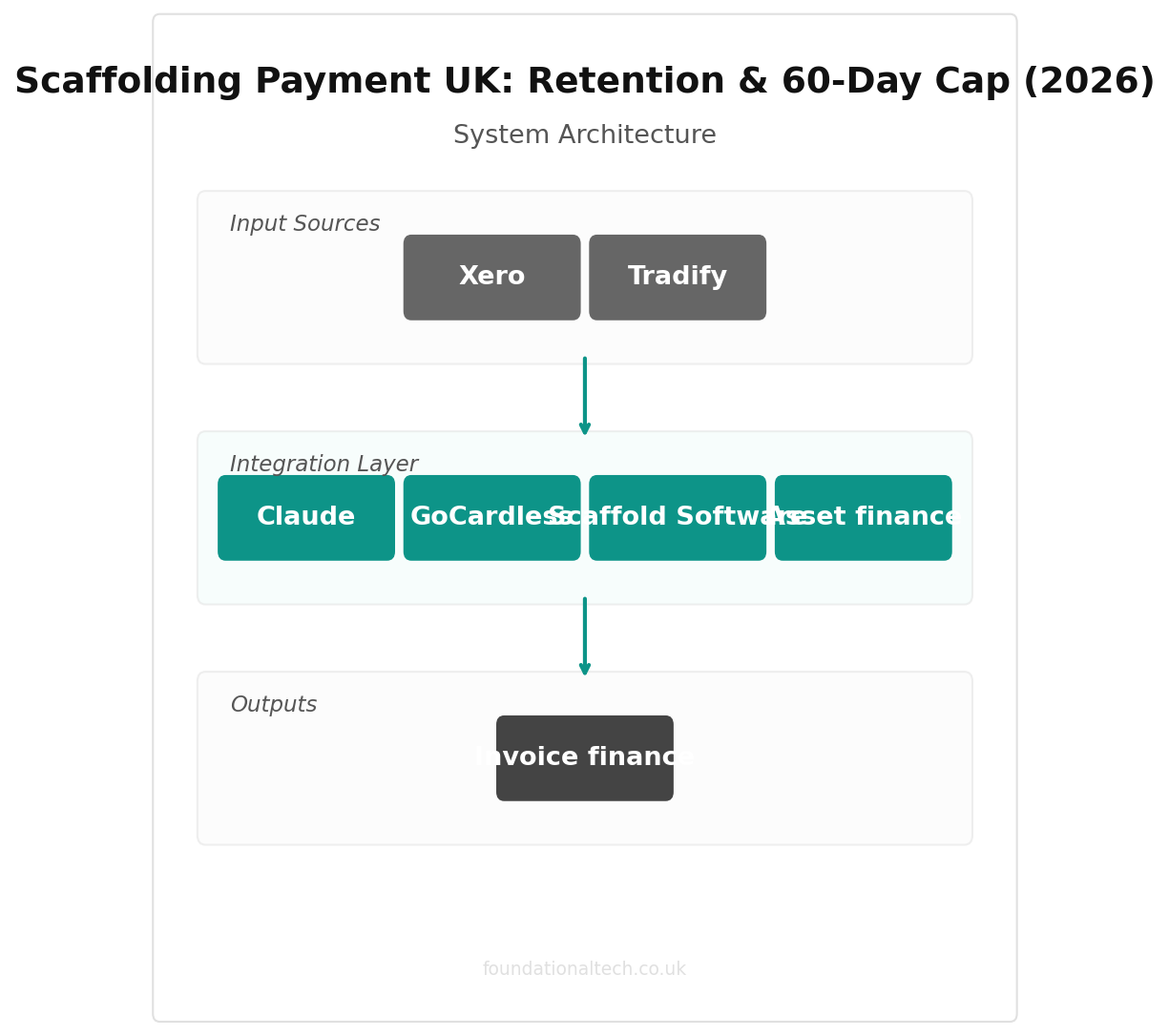
Two financing routes are standard in UK scaffolding specifically, distinct from the invoice-chasing tools covered in Article 1. Asset finance covers hire purchase or lease agreements against tube, fittings, boards, mobile towers and the transport that moves them. It spreads the capital cost of stock over terms up to five years. Some UK scaffold-sector lenders offer zero-deposit agreements and same-day approval on straightforward equipment deals under £50,000. This doesn’t fix the erect-to-payment gap directly, but it stops the stock purchase itself from being the thing that empties the account before the job’s even priced its first application.
Invoice finance addresses the gap more directly. A lender advances a percentage of an unpaid invoice — typically 80–90% — within a day or two of it being raised. The balance, less a fee, is released once the client pays. For a firm running several large commercial contracts with 60-day terms, this converts “erected, invoiced, waiting” into “erected, invoiced, funded” without waiting on the client’s payment run. It’s not free: factoring fees typically run in the low single-digit percentages of invoice value. But set against the cost of a stalled payroll or a missed materials order on the next job, it’s frequently the cheaper option.
Neither of these is software in the automation-stack sense. Both belong in the same conversation as the platforms in Articles 1 and 2. A scaffolding firm’s cash position is decided as much by how the erect gets funded as by how quickly the rent gets chased.
The two routes aren’t mutually exclusive, and most growing firms end up running both at once, for different reasons. Asset finance handles the lumpy, predictable capital cost: a new run of tube for a bigger contract, a second wagon once one truck can’t keep three gangs supplied. It spreads over a fixed term at a fixed cost, so it doesn’t fluctuate with how quickly any one client happens to be paying that month. Invoice finance handles the unpredictable timing risk. Think of the client who’s contractually on 45 days but regularly stretches it to 70, or the industrial job where the principal contractor’s own payment run only fires once a month. Treating them as one decision rather than two separate ones is a common mistake. Firms often reach for invoice finance to cover a stock purchase that asset finance would fund more cheaply, or vice versa. It happens because nobody separated “what am I buying” from “what am I waiting to be paid for” before picking a product.
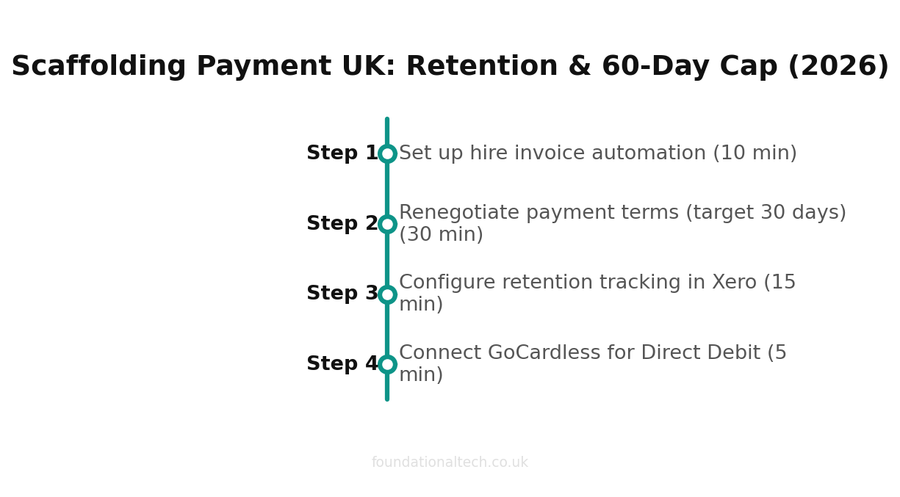
| Step | Action | Time |
|---|---|---|
| 1 | Set up hire invoice automation | 10 min |
| 2 | Renegotiate payment terms (target 30 days) | 30 min |
| 3 | Configure retention tracking in Xero | 15 min |
| 4 | Connect GoCardless for Direct Debit | 5 min |
Renegotiating Terms While the Rules Are Still Changing
Until the Commercial Payments Bill actually lands, retention clauses remain enforceable exactly as written, and no principal contractor is under any current obligation to drop them early. But the direction of travel is now public and unambiguous, which changes the negotiating position on new contracts even before the law does. Firms pricing new commercial work in the second half of 2026 have a genuine opening here. Push for retention held in a ring-fenced trust account rather than the client’s general working capital — a practice some larger contractors already offer voluntarily. An alternative is to negotiate the release split further in your favour: 60/40 at practical completion rather than the standard 50/50. Offer in exchange to accept the shorter defects window scaffolding work typically carries compared with the building above it. None of this requires waiting for legislation. It requires someone in the business treating the payment schedule as a line item worth negotiating, not a boilerplate paragraph to sign and move past.
Stop doing scaffolding admin by hand
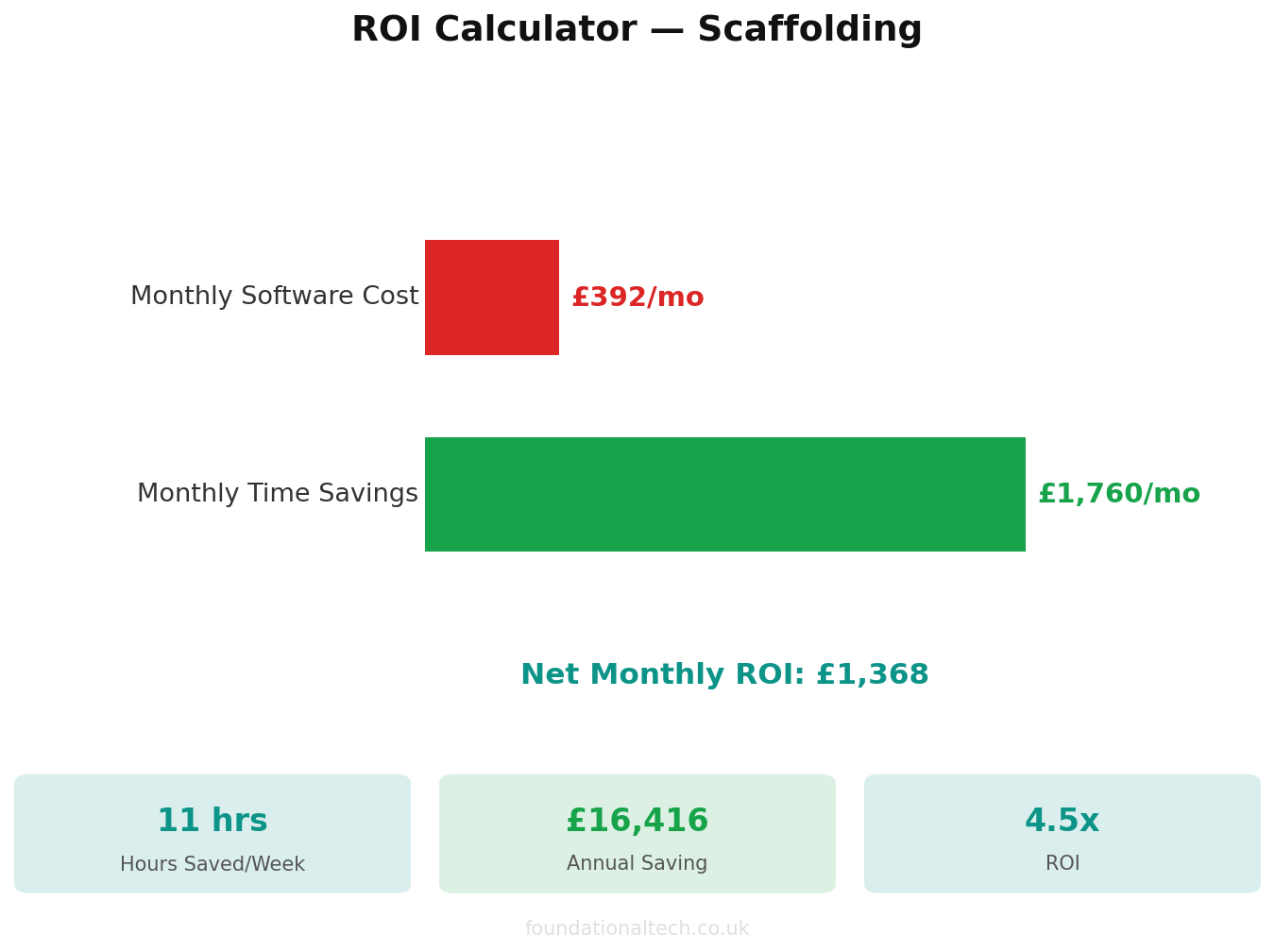
The Scaffolding Automation Starter Kit gives you a quote-to-invoice Excel workbook, a Make.com automation blueprint, and a step-by-step setup guide. Save 8–12 hours a week on paperwork.
Tracking Retention Like It’s Real Money, Because It Is
The fix here isn’t complicated, but it has to be deliberate, because nothing in the standard scaffolding software stack does it for you automatically. When an application for payment goes out with a retention deduction applied, that retained amount needs its own line in Xero. Not written off the books as “paid,” but held as a debtor with two dates against it: the practical-completion release date for typically half the retention, and the defects-liability-end release date for the remainder. Most scaffolding firms currently track this, if at all, in a side spreadsheet that nobody reconciles against the bank feed. Move it into Xero as a tracked receivable, reviewed monthly alongside the standard aged debtors report. Retention stops being a number you vaguely remember being owed and becomes one your accounts actively chase the moment it falls due. That matters considerably more once the 60-day cap and 8% statutory interest give you real teeth to chase it with.
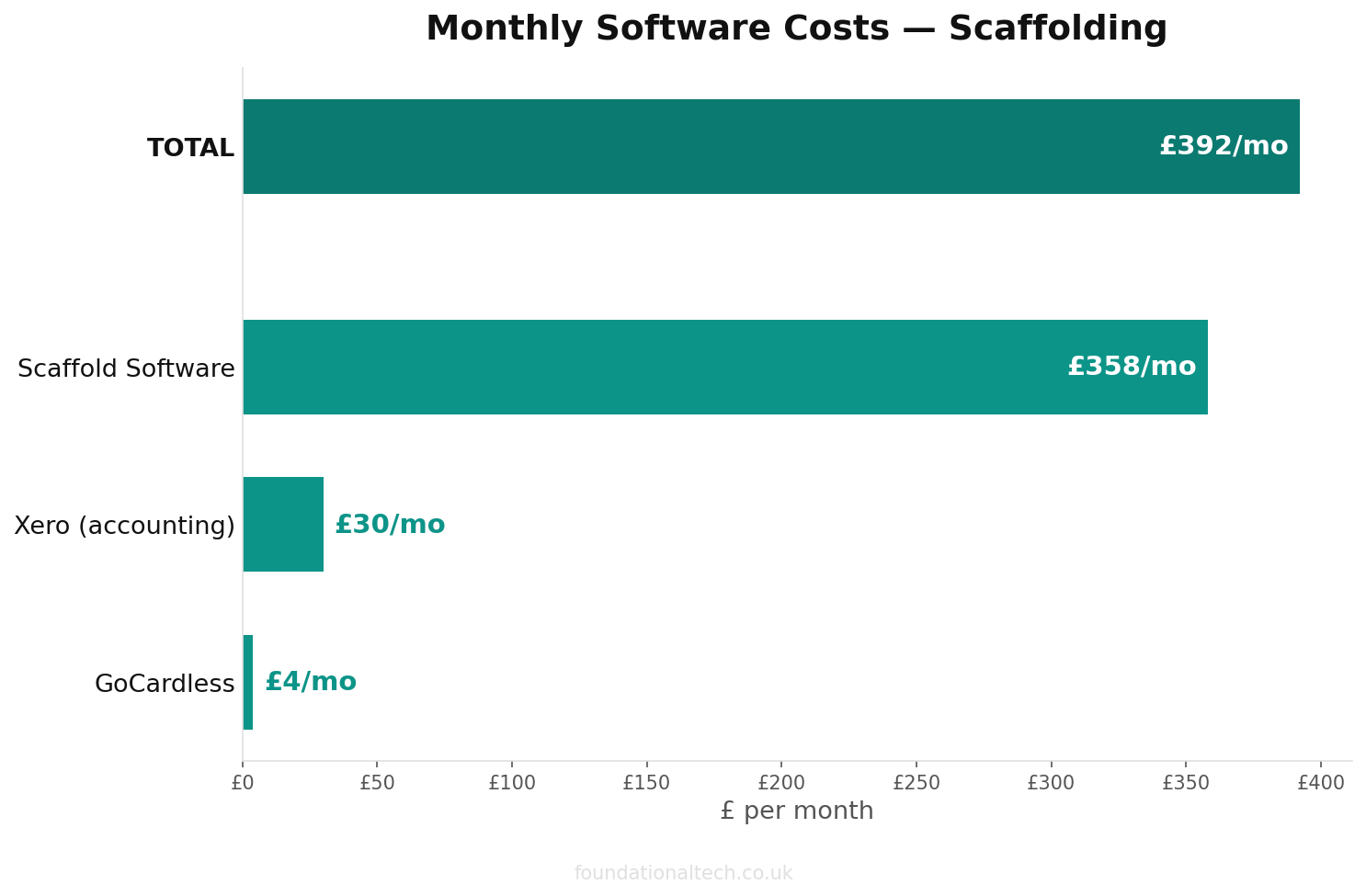
Weekly ground rent, covered in Articles 1 and 2, still runs through The Scaffold Software’s automatic billing and GoCardless Direct Debit collection exactly as described there. That part of the cash-flow picture doesn’t change here. What changes is treating retention and the erect-financing gap as equally deliberate parts of the same system, rather than the two blind spots every other part of the stack quietly assumes someone else is handling.
60-day cap incoming
The Commercial Payments Bill will cap payment terms — prepare your scaffolding business now
The Numbers
A mid-sized scaffolding firm running twelve to eighteen live commercial contracts at any time, with retention withheld at the standard 5%, typically has £15,000–£40,000 sitting in retention at various stages of the release cycle. That money is real, contracted, and overwhelmingly recoverable, but only if someone can say, without checking three different places, exactly how much is owed, by whom, and when it falls due. Firms that move retention tracking into the accounting system rather than a side spreadsheet report catching release dates two to four months earlier on average. At 8% above base rate once the new statutory interest rules bite, that gap is no longer a rounding error either.
Related guides: If you found this useful, see our guide on AI Automation for Construction: How to Connect Claude to Tradify, Xero and Your Job Stack (2026) and Scaffolding Software UK: How Scaffold Contractors Are Automating Quotes, Weekly Hire and the 7-Day Inspection in 2026.
How much retention is owed to your firm right now, across every live and recently finished contract? And could you say, without opening a spreadsheet, which slice is closest to its release date? Reply and tell me the total. I’m building a benchmark for Article 5.
Considering Tradify? Get 50% off for 3 months.