Key Takeaway
Ofgem pays BUS grants in 2–4 weeks after a clean submission. Same-day redemption rules, deposit handling and Xero cashflow setup explained step by step.
From Monday 21 July, an oil or LPG boiler swap in an off-gas-grid home carries a £9,000 Boiler Upgrade Scheme grant instead of £7,500. Good news for your order book. Quietly worse news for your bank account — because every grant pound is a pound you deduct from the customer's invoice on day one and only get back when Ofgem processes your redemption claim.
The pillar article in this series named the problem: on a BUS grant claim job, the biggest line on the invoice is money you'll only see if the paperwork chain completes. This article is the fix. It covers how to structure deposits inside the consumer-code rules, how to run commissioning day so the grant claim is submitted before the van leaves the drive, and how to set up Xero so you always know exactly how much of your money is sitting inside two arms of government.
Three Clocks Run on Every BUS Job
Most trades have one payment clock: invoice date to payment date. A BUS job runs three, and only one of them is fully yours to control.
120 days
deadline to submit your BUS redemption claim after commissioning
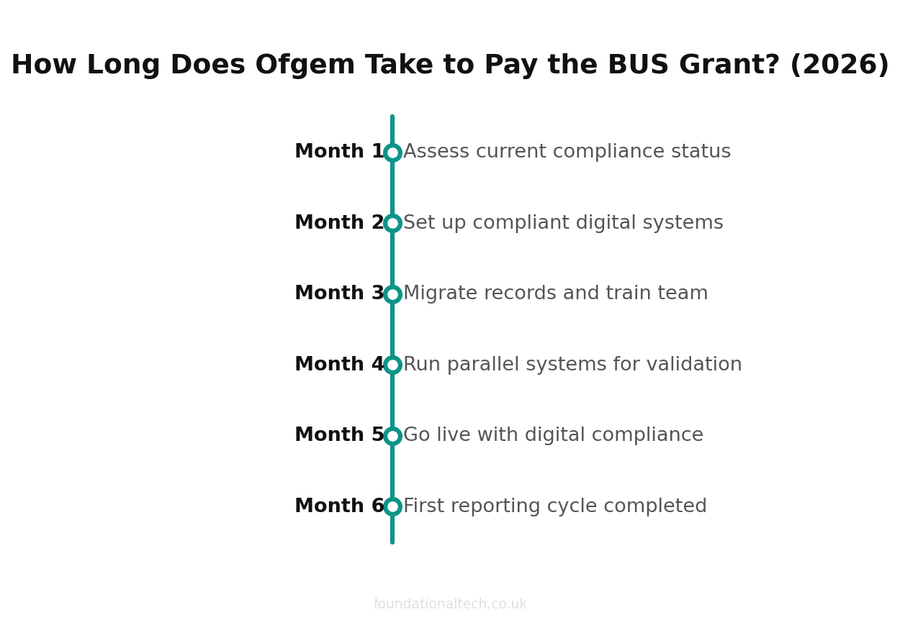
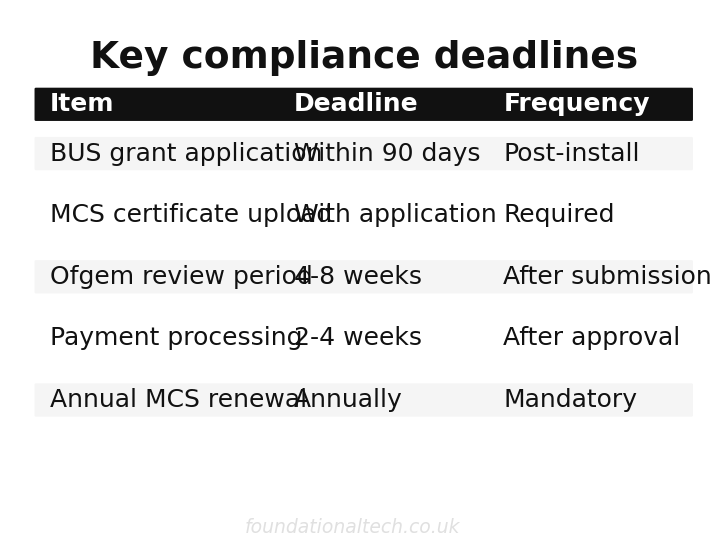
Clock one: voucher validity. Once Ofgem issues the voucher — typically two to four weeks after application — you have three months to install and commission an air source heat pump, or six months for a ground source system. Blow this and the voucher lapses. In practice this clock disciplines your scheduling, not your cash.
Clock two: commissioning to redemption. You must submit the redemption claim within 120 days of commissioning. That sounds generous. It is a trap. The 120 days is a deadline, not a target. Every day between commissioning and submission is a day your £7,500 (or £9,000, from Monday) sits at zero per cent in the Treasury's account instead of yours. Firms that batch their redemption admin "for the end of the month" are lending the government an extra three weeks per job, voluntarily.
Clock three: Ofgem processing. Once the claim is in with complete evidence, Ofgem typically processes redemptions in two to four weeks and pays the grant directly to you. You cannot speed this up. What you can do is make sure it never restarts — an evidence gap (missing commissioning record, MID certificate mismatch, wrong bank details) bounces the claim back and the clock starts again.
The whole cash flow strategy for a BUS installer reduces to one sentence: compress clock two to zero and never trip a restart on clock three.

The Deposit Rule That Ties One Hand Behind Your Back
A builder facing a materials-heavy job takes 40% up front and shrugs. You can't. If you're MCS certified you belong to a consumer code — RECC or HIES. RECC's rules are explicit: a deposit must be a reasonable percentage of the contract value, must never exceed 25%, and must be insured so the customer is protected if you cease trading. Advance payments beyond the deposit are permitted, but they too must be reasonable, used only for the contracted work, and insured.
So a £13,000 install with a £7,500 grant leaves a customer price of £5,500. The most you can take at contract is around £1,375 if you apply the 25% to the customer's net price. It may be more if your code and insurer support applying it to the gross contract value. Check which basis your code membership actually permits before you build it into your quote template.
Inside those rules, there's still a compliant structure that protects you:
Deposit at contract — up to the code maximum, insured, collected the day the contract is signed, not the day you start.
Advance payment at kit delivery — when the heat pump, cylinder and radiators physically arrive, a second insured payment is defensible: the money is demonstrably being used for the contracted work. This is the payment that stops you funding a £4,000 kit order out of your overdraft.
Balance at commissioning — invoiced on the day, due on receipt.
Put the schedule in the quote, in the contract, and in the job software so each stage fires its own invoice. If the customer is told at quote stage that the balance is payable at commissioning, commissioning day stops being the start of a negotiation.
Commissioning Day Is Certificate Day, Invoice Day and Redemption Day
Here is the habit that separates installers who float £10,000 from installers who float £30,000: everything happens on commissioning day, before the van leaves the postcode.
The sequence, in order, takes under an hour with the stack from articles one and two:
Commissioning record completed on site — in Payaca (or whatever job platform you run), with photos, flow temperatures and sign-off, while the customer is standing there.
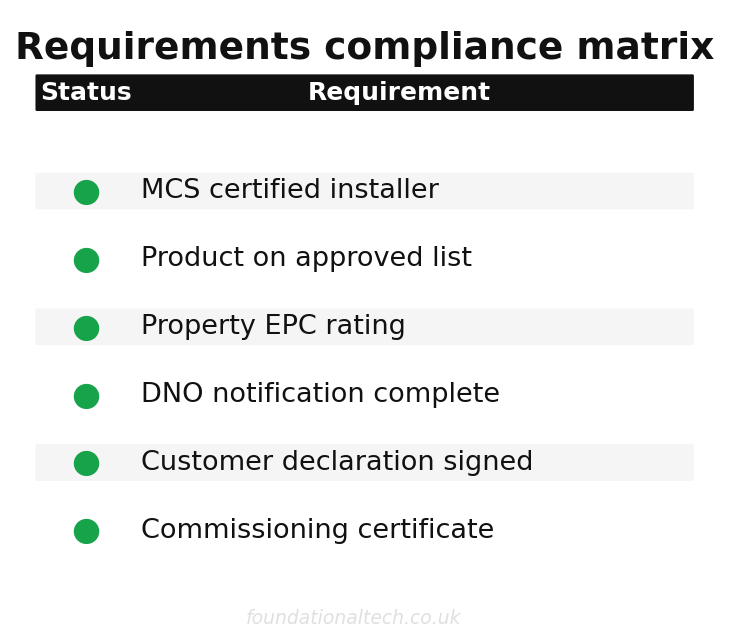
MCS certificate generated on the MID. The scheme allows ten working days. Take ten minutes instead. The certificate is the keystone document — the BUS redemption cannot go in without it, and the customer's handover pack is incomplete until it exists.
Redemption claim submitted to Ofgem — same afternoon, evidence attached, checked against a fixed checklist so nothing bounces.
Balance invoice sent from the job record — auto-generated from the agreed payment schedule. The grant deduction shows as its own line, so the customer sees £7,500 of government money on their paperwork, not just a discount.
Do this five times a month and you have permanently pulled two to three weeks of grant float out of your business. On three BUS jobs a month at the new blended rates, that's £24,000 that used to hover in limbo now cycling back in half the time.
Two Arms of Government Owe You Money. Chase Both Monthly
The grant is only half your government receivable. Until 31 March 2027, domestic heat pump, solar and battery installations are zero-rated for VAT — you charge the customer 0% but reclaim the full 20% input VAT on everything you bought for the job. (The rate is due to revert to 5% on 1 April 2027, which is worth a diary note for your 2027 pricing.)
Zero-rated sales plus standard-rated purchases makes you a repayment trader: most VAT periods, HMRC owes you. A firm buying £7,000 of kit and materials per install is accruing £1,400 of reclaimable VAT per job. On quarterly returns, that's up to £12,000 sitting with HMRC for three months at a time across a busy quarter. Switch to monthly VAT returns — HMRC allows repayment traders to elect this — and the refund lands twelve times a year instead of four. Xero (Standard £33/month, Growing £37/month) files MTD returns either way; the only change is the filing frequency setting and a monthly five-minute review.
Set up two dedicated account codes: one for BUS grant receivables, one tracking VAT repayment position. Your dashboard should answer, at a glance: how much is Ofgem holding, how much is HMRC holding, and how old is each pound. If the oldest grant receivable is more than five weeks old, something bounced — and you want to know before the merchant statement arrives, not after.
Collecting the Customer's Share Without Feeding the Card Machine
After a £7,500 grant, customer balances still run £3,000–£6,000 — and at those sizes, payment method is a real cost line, not a rounding error.
Take the £5,500 customer share from the £13,000 BUS install above, collected in one payment. By card through Stripe at 1.5% + 20p, it costs you £82.70 in fees. The same payment by Direct Debit through GoCardless costs the capped £4 fee plus the high-value surcharge of 0.3% on the portion above £2,000 — £10.50 — for £14.50 all in. Same money, same customer, £68 difference. Across thirty balance payments a year, that's the price of your Payaca subscription several times over.
The practical split: take the contract-stage deposit by whatever method removes friction — card is fine at deposit size. Then set the expectation in the contract that stage and balance payments go by bank payment or Direct Debit. Payaca invoices carry the pay-by-bank link natively; the customer taps, approves in their banking app, and the payment reconciles against the invoice in Xero without you touching it. For the rare slow payer, Xero's built-in reminders do the nudging. On a well-run BUS job, though, the balance conversation happened at quote stage, and the invoice arrives while your commissioning engineer's van is still visible from the kitchen window.
What the Month Looks Like When the System Runs
Take a two-fitter firm in Shropshire — proper oil-boiler country, exactly where the £9,000 uplift bites. Five installs a month, three with BUS vouchers averaging £8,000 after the July change.
Before: redemptions batched month-end, submitted on average 20 days after commissioning, one in four bounced for evidence gaps. Grant cash arrives 40–55 days after commissioning. Steady-state float: £35,000–£40,000 of the firm's money split between Ofgem and HMRC (quarterly VAT). Merchant accounts settled from the overdraft in busy months.
After: same-day redemptions with a fixed evidence checklist, monthly VAT returns, kit-delivery advance payments insured under the code. Grant cash arrives 14–25 days after commissioning. Steady-state float: £14,000–£18,000. The £20,000 difference didn't come from winning more work or raising prices — it came from submitting paperwork on Tuesday instead of three Tuesdays later.
The system costs almost nothing you're not already paying: Xero you have, the job platform you have, GoCardless and pay-by-bank are per-transaction, and monthly VAT filing is free. The only genuine investment is the commissioning-day discipline.
Related guides: If you found this useful, see our guide on How to Connect Heatpunk, Payaca, Xero and the DNO Portal: The Complete UK Heat Pump and Solar Integration Map (2026) and FENSA, PAS 24 and the Four-Supplier Invoice: Automating Back-Office Compliance for UK Window and Door Installers (2026).
So, the honest number: how many days pass between switch-on and your redemption claim actually going in to Ofgem — same day, same week, or whenever the pile clears? And has a claim ever bounced back on you for an evidence gap? Reply with your worst wait; I'm collecting real redemption timelines from working installers, because Ofgem's "2–4 weeks" and the number in your bank statement are not always the same thing.